


SHOW NOTES
Three quarters of people in the semaglutide trials had a gastrointestinal side effect. Only four per cent of UK adults were eating enough fibre before any of this started. So we've put millions of people on a medication that slows the gut down, in a country that was already barely eating any fibre, and then wondered why everyone feels awful.
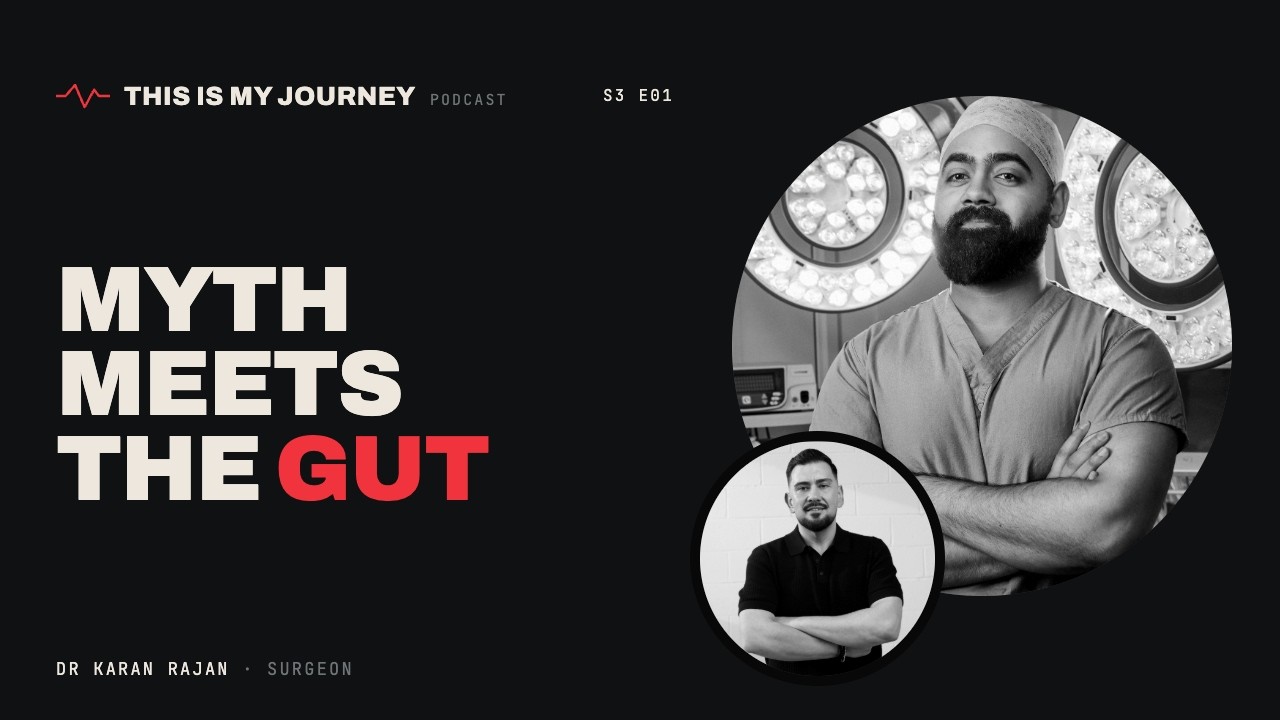
In this episode I'm joined by Dr Karan Rajan, an NHS surgeon, university clinical lecturer and one of the most-followed health educators in the world, with well over ten million people following him for his myth-busting videos. He's the author of the number one Sunday Times bestseller This Book May Save Your Life and of This Is Vital Information, host of the podcast Dr Karan Explores, founder of LOAM Science, and Chief of Science at gut health company Throne Science.
We talk about what these medications are actually doing in your gut and why the side effects are so varied, which of them you can do something about and which you simply have to ride out, why fibre matters far more than anyone told you, the single biggest piece of GLP-1 misinformation currently circulating, and the moral undertone that says taking these drugs is somehow cheating.
SOURCES REFERENCED IN THIS EPISODE
Wilding et al., "Once-Weekly Semaglutide in Adults with Overweight or Obesity" (STEP 1), New England Journal of Medicine, 10 February 2021
British Nutrition Foundation, "Dietary Fibre in 2026", drawing on NDNS 2019–2023
ABOUT THE GUEST
Dr Karan Rajan
Dr Karan Rajan is an NHS surgeon, university clinical lecturer and health educator with well over ten million people following him for his myth-busting videos. He is the author of This Book May Save Your Life and This Is Vital Information, hosts the podcast Dr Karan Explores, is founder of LOAM Science and is Chief of Science at gut health company Throne Science.
MORE EPISODES LIKE THIS
The Weight Loss Drug After Mounjaro: Retatrutide
S3 E2 · Dr Fatima Cody Stanford · 52 min
Hair Loss on Mounjaro: What Actually Helps
S3 E3 · Nyrah Saleem · 30 min
HRT, Mounjaro and the Heart in Midlife
S3 E4 · Dr Komal Patil-Sisodia · 46 min
FULL TRANSCRIPT
We are back bigger, better, and bolder than we have been on seasons one and two. If you're still with me here, I appreciate you all so much. And I am super excited to bring you season three of This Is My Journey, the podcast. And today we start with a bang. We are separating what these medications are. being GLP-1s actually do from what the internet says they do.
So we're going to start with the gut because that's where most people's experience of this begins. In the landmark step one trial of semaglutide, 74% of participants had a gastrointestinal side effect. Nausea in 44%, vomiting in 25% and constipation in 23% against 9.5% on placebo. Now, hold that next to this. Only 4% of UK adults were eating enough fiber before any of this started. 96% of us were already short.
So we've put millions of people on a medication that slows the gut down in a country that was already barely eating any fiber and then wondered why everyone feels awful. Well, my guest today has built one of the biggest health platforms in the world on exactly this kind of straight talking. So, Let's roll the intro and get into it and I'll let you know who today's special guest is. When I started, I was on my own.
Two years ago, I began GLP-1 medications for chronic obesity with no real idea of what was coming. Not the good parts, not the hard parts, and definitely not the parts nobody warns you about. So I went looking for answers and what I found was just noise. Opinions, judgment, people selling something and everyone had a take and nobody had the truth. 126lbs down, I'm still on this road, still learning, still working out what maintenance actually means. Because losing the weight, it turns out, was only half the story for me.
I'm Marc and this is This Is My Journey. Every week I sit down with the people I couldn't reach back then. Leading doctors, obesity specialists, psychologists, dieticians, fitness experts, surgeons, and the people who actually understand what this medication does to your body and your mind and who'll tell you straight. And alongside them, working professionals and people walking the exact same road as you because their answers they matter just as much just honest conversations about what this really takes the science the setbacks and the stuff you won't hear anywhere else if you're on glp ones or you're thinking about starting them or you're just trying to make sense of it all this podcast is for you because nobody should have to do this alone not anymore Welcome back everyone and today my guest is an NHS surgeon, a university clinical lecturer and one of the most followed health educators in the world with well over 10 million of you following him for his myth-busting videos which managed to be educational, entertaining and generously dark-humoured all at once.
So Dr. Karan Rajan is the author of the number one Sunday Times bestseller, this book may save your life and of This is Vital Information, which was published in January, which is built entirely around the things people are too embarrassed to ask their doctor, but really should. Most of you will know him from his own podcast, Dr. Karan Explores. What you might not know is that he also founded LOAM Science, which we'll get into later. And he's chief of science at the gut health company, Throne Science. Dr. Karan, thank you so much for joining me today.
I'm absolutely stoked to have you. Yeah, it's a pleasure, Marc. Thanks for having me. I know you have your own podcast, so I'm in great company in terms of you being a guest on mine. So I suppose really to get started for anyone who somehow has not come across you yet, because I don't know how they haven't, if that is the case, maybe tell us something about yourself. Nobody would maybe really know.
And what made a working surgeon decide that the biggest thing he could do for people's health was explain it to them properly on social media? Yeah, maybe a lot of people don't know, but I really love cooking, especially baking. I got into it during lockdown when I had a lot of downtime over the weekends and when I wasn't going out. So I really got into that and kind of helped me clean up my nutrition a lot as well and understand food and doing a lot more cooking for myself. With regards to social media, I actually started even before I became a doctor. When I was a medical student, I actually started on social media to try and educate the people in the year below me.
And that kind of spawned everything I do now. Amazing. I've actually a few guests planned that have crossed paths with you in some shape or form in your professional working life. So, yeah, I think it's very much a circle moment right now that you're here. Your latest book, I suppose, is built on the idea that embarrassment is a genuine health risk. you know, that people delay because they're ashamed to ask.
So, you know, how much of that do you see around weight specifically? Yeah, it's intrinsically tied to a lot of health outcomes. You know, for certain reasons, increased amounts of adiposity and visceral fat can be detrimental to health. We know that it's a metabolic risk factor. It's a cardiovascular risk factor. It's a cancer risk factor as well.
However, there is a lot of weight stigma where A lot of doctors as well as just general people fail to understand the complexities of obesity and the etiology of it, how there's a significant genetic component, an epigenetic component, socioeconomic factors at play. So many factors at play, including psychological factors. And so, you know, that weight stigma, because of a lack of understanding, can lead to worse treatment. and worse treatment outcomes as well because of that. I think this is great because I think you're really good at playing English and the terminology around all this and helping people understand.
I think that's where I want to get into talking about the gut specifically for this episode because I think there's so much to say about it and what it does when you're on GLP-1 medication. So... Mechanically, what are these GLP-1 medications doing to the gut and why does it produce such a spectacular set of side effects? Yeah, I mean, it's based on the hormone that we already produce endogenously or naturally called GLP-1, glucagon-like peptide. And that usually is broken down within a few seconds to a couple of minutes by the body, by the DPP-4 enzyme that we have. So we produce natural GLP-1 when we eat virtually any food.
And that's broken down immediately. And the GLP-1 is one of various hormones that we have that is involved in appetite regulation and the feeling of fullness. It does other things as well, such as providing some anti-inflammatory effects. And a synthetic compound, semaglutide, which is the active ingredient in azempic and munjaro and tisepatide, that can last a bit longer because it's not broken down by the enzyme immediately and it can last for up to a week. And that can vary person to person. But yeah, the primary side effect that we can measure and that we see is weight loss.
But we're beginning to understand that there's interesting effects beyond weight loss. There's some anti-inflammatory effects and potentially even some brain-related effects. I see it all the time, really interesting part of this journey, especially when you're talking to certain people that have experienced them. I suppose three quarters of people in the trials that I mentioned at the very, very start of this episode had a gastrointestinal side effect. Which of them can people genuinely do something about and which do they just have to rule out? So typically for a lot of people, they may experience some degree of nausea.
And the nausea is sometimes part of the equation because what these GLP-1 medications do is that they slow down the rate of your stomach emptying. The gastric emptying is slowed down. That contributes to the feeling of fullness. So you eat less, which is the desired outcome. So you consume less calories and then you lose weight. However, an unintended side effect is that you can get some nausea and vomiting.
That usually... goes away with time. However, there are some other things which don't necessarily go away with time unless you actually focus on them from a gut perspective. And one is obviously a lack of fiber. You know, your appetite is reduced. Fiber is a very satiating molecule.
So if your appetite is reduced, one of the first things you might cut out is fiber and a chronically fiber deficient guts will be likely to be more inflamed. There's more slowness in the gut, more constipation, bloating, cramps, all those things might rear their head if there's less fiber. I think it's something that I learned while I was doing this. Constipation is a big thing with people. And it's interesting to hear you say that fiber is one of the first things that we cut from our diet. It's not something I've thought about before, but actually it would be true when you think about it.
So... Moving on, only 4% of UK adults were eating enough fiber before any of this. So why does fiber matter so much and what does it actually do down there? I know you've kind of touched on that in the last question there. Yeah, I mean, we probably collectively need to start thinking about fiber as a catalog of different molecules which have different functional properties, different structural components, which means they do different things.
It's like vitamins. Vitamin A does a different job to vitamin B, C, D, E. And whilst they all share some commonalities in providing some effect, they also do completely different things. For example, vitamin C may have more of an involvement with skin health. Vitamin A may have more of a focus on vision and eye health. Same with fibers as well. They all share a common denominator.
They may help with the gut generally, maybe feed the microbiome, provide an anti-inflammatory effect. But for example, tiglucan, which is a type of prebiotic fiber that's found in things like oats or barley, has a significant role to play in cholesterol reduction. Whereas something like pectin, a soluble fiber found in apples, may have a slightly different role. And so actually different fibers do different things. They feed different bacteria and they can also work in different areas in the colon where they're fermented. And so they are involved in virtually...
all of human physiological processes from regulating hormones, heart health, helping to train the immune system via the microbiome, via the gut-skin axis, help to keep the skin healthy, generalise anti-inflammatory effects, cancer risk reduction, chronic disease risk reduction, obviously helping with bloating, speeding up gut transit time, making you feel full. The list is endless. Yeah, and I suppose really for you, obviously, to touch on LOAM Science so where did that inspiration come from to create that Yeah, it came actually from my own medical problems that I had. In 2018, I did a random blood test and I found out I had high LDL cholesterol, which is the bad cholesterol.
And several months later, I also had an ultrasound scan, which suggested that because of my high cholesterol, likely I had mild fatty liver disease. So as a young man in his late 20s, I was very concerned. And I worked with a dietician to kind of get to the cause of some of this stuff. And it turned out that I was eating a lot of protein from red meat, so a lot of saturated fats, and not a lot of fiber at all. I was having less than 10 grams of fiber a day.
So whilst I was a doctor, I wasn't practicing what I was preaching, and it took a lot of months of me to build up my fiber intake from food. But also at the same time, my dietician I was working with recommended I also supplement with fiber supplements as well to really get me up there so I can really try to help my cholesterol reduction as fast as possible. And I was cycling through so many different supplements and they just didn't quite work for me either because of the taste or the texture, the quality of the science, the low number of grams of fiber or the fact that it would have other random ingredients in it like maltodextrin, which can, you know, just it's not needed. And. That started me thinking, okay, so I'm really struggling now to find a good fiber. And I was probably recommending a lot of this to my patients as well in the clinics over the years.
And in 2023, it came to like a conclusion where I thought, you know, I'm using all these supplements. None of that's really working for me. Let me see if I can make something of myself that I could use. And I was actually blending five different fibers at home in my kitchen and, you know, concocting my own little fiber cocktail, essentially. And that was just not scalable. It was very expensive and time consuming.
So I thought, Ashley, do you know what? Like, there could be something here. I could actually make something, which is a blend of different fibers that I could use. Maybe other people would like it as well. And initially, I made it for myself. My dad loved it as well.
He takes fiber supplements. He doesn't like psyllium husk, and this goes on a treat for him. And, you know, I speak a lot about fiber online. And, you know, my community were interested in it as well. And, you know, here we are. I have been lucky to try it.
And yeah, I think the thing I like about it is I hate things that are flavored and that you can't disguise in other things. And I think that does a really good job. You don't even know. I think for me, the taste of fiber, to anybody that's listening, you almost think woodiness. That's what my brain tells me. But...
Yeah, I think it was really, really good and really fine. And I love the fact that you can get it either just powder-based or in the little sachets. I think it's great. It's really easy to take around with you. I actually went to Dublin last weekend and was able to take some of the little sachets with me, which was really handy just to throw in the bag. I suppose then moving on.
into the GLP-1 space again, what's the single piece of GLP-1 misinformation you're currently seeing and what's the truth around it? So I think that probably the most pervasive myth about GLP-1s, which is a partial myth, but the actual underlying science that we hear online is mostly inaccurate. A lot of people say that GLP-1s cause muscle loss and bone density loss. And that's not completely untrue. Any weight loss, especially large amounts of weight loss in a short pace of time, can cause loss of lean mass tissue, including bone density.
That's any weight loss, whether it's bariatric surgery, weight loss surgery, and just exercise and dieting. However, there is no causative mechanism by which GLP-1 medications specifically spike muscle loss in and of itself. It's just a consequence of large weight loss. And actually in studies that have been done, looking at MRIs and looking at GLP-1 medications and people using them and taking MRIs, there's a loss of intramuscular fat. So the fat in the muscle has been lost.
And whilst the muscle may look shrunken, it's actually more functionally efficacious and effective and healthy because the actual fat from the muscle has been lost, which is actually quite healthy. Now, if you're on a GLP-1 medication, the same as any weight loss, you need to be maintaining your protein intake so you can minimize muscle loss. And you need to be doing some resistance training and exercise on a regular basis, protein and training to minimize muscle loss. I think that's really something that I can resonate with because it was something that I actually thought being on this journey that I was going to lose muscle mass. But actually in the end, when I went back to the doctor, had all my stats all done and checking your visceral fat and things around your organs, I think the muscle was the one that I thought I might struggle to maintain but actually I was all good and I think that was that was mainly down to you know making sure that I was getting enough protein and all that means I think that's a really good myth to bust because it's that's one of them ones you see all the time so you know there is a strong moral undertone to how people talk about these medications you know
the sense really that it is cheating and I hear it all the time. As a surgeon, what is your take on it? Yeah, I think it's all wrapped up in some of this weight stigma as well, where, you know, historically there's a certain proportion of people who tie some sort of moral value to someone's weight as though their social worth is determined by a number on a scale and also how Someone is fat because they don't have enough willpower. They overconsume because of some failure on their part. They're not responsible for their own health.
People who are overweight know they're overweight. And guilt-tripping them and negative thoughts and admissions don't help. They need a supportive environment. This is what the psychology of obesity says. This is what all the literature says as well. So these medications...
actually have helped us to understand obesity a lot more. And it's not cheating in the same way that someone taking blood pressure medications to deal with their hypertension is not cheating. The same way that taking insulin if you're a type 1 diabetic is not cheating. Because this medication works when you take it. And when you stop taking it, it stops working. And so we know that there's a cause and effect.
And there is something driving the obesity and the appetite dysregulation, often called food noise. And this medication, one of the things that a lot of patients report, is that it turns down the volume of the food noise. There's less of these intrusive thoughts that are continuous throughout the day about food. So they're less likely to overconsume things. eat a healthier, cleaner, more diverse diet and stick to the other things as well. You know, it's something that I've had to battle for sure, that whole cheating terminology being directed my way.
But I think you've put a really nice way there. I think that a lot of these people take a lot of that to heart. And I think what they need to know is basically everything you said there and that it's that's not the case. You know, some people do need these medications to, you know, prolong their life, I suppose. And that was definitely the case for me.
So you are chief of science at a gut health company building sensors for toilets. Why is what comes out the other end such an underrated source of health information? Yeah, I mean, what we pass, bowel motions daily, our number twos can tell us so much about our health. Simply the size, the shape, the consistency, the color, if there's any blood. It just gives us so many clues about our health, you know, over a short period of time, but also a longer period of time. You know, immediately, if you see blood, that is something that you should not take lightly, and you should see a doctor about that.
That's a very immediate thing. If you notice over several weeks that your stool is becoming... like smaller and harder to pass and you're more constipated, that's also a sign that there may be a slower, longer process going on. Get that investigated as well. So I think it is a really good tool that is free for us to assess the state of our health. I think that's a really good thing.
I suppose we're coming near the end of what I have to ask you and I think everything you've covered there is just brilliant and you know there'll be a lot of good information now that people can go forward with if they're starting their journeys and things. You've spoken about proactive medicine and having the difficult conversations early. Just kind of touched on what you've just said there. What's the conversation people on this journey should be having that they're not? Yeah, I think it's acknowledging that whilst I think it's a game changer for a lot of people and it can really help a lot of people as well.
it doesn't mean that the medication does all the work. So for example, to make parallels with other chronic conditions, if you have high blood pressure or high cholesterol and you've been prescribed a medication, you've got high cholesterol and you've been prescribed a statin. You don't just have the statin and throw all the other lifestyle factors to the wind. If you have high cholesterol, you need to exercise. You need to make sure you maintain a healthy weight. You need to eat certain foods that can help you lower your cholesterol.
So increasing amount of soluble fiber. You need to sleep better. you know, activity levels. The overall lifestyle component is not a nice to have. It is essential. If you just rely on medications alone, you'll get some benefit.
But if you want even greater benefit, The lifestyle plus the medication synergistically working together will give you even more benefits. And that is exactly the same for GLP-1 medications. If you're on a GLP-1 medication, chances are for most people, you will lose weight if that is what you're taking it for. But if you take the medication and do resistance training and clean up your nutrition and diet, maintain high protein, high fiber, do all those things, you'll get even better outcomes. And even for the people who are non-responders, which means they lose less than 5% of their total body weight, you still see some benefits of GLP-1 medication.
So the weight alone is not a marker of whether the medication is working or whether your lifestyle changes are working. Because we also know from a lot of studies that you can exercise, and actually not lose any weight. That doesn't mean you're not improving your health because your body composition could be changing. You could be losing fat and increasing muscle, but your weight stays the same. That is actually good.
Whereas if you're just on a medication, you can lose weight, And you can lose a lot of muscle and not as much fat in association with that. And so your weight on the scale comes down and you think that's good, but actually you could be getting weaker from a musculoskeletal metabolic point of view. So don't just look at the number, look at your functional capacity, your strength, your mood, all those other things are important as well. I think that's all really, really, really great sound advice for people to take on board. I think, you know, working on that full picture and habits is critical to success if you're on these medications.
So Dr. Karan, thank you so much for joining me today on this episode. It's been an absolute pleasure having you. To finish things up, I want to give you an opportunity to, you know, tell people where they can find you. I'll link everything anyway in the caption. So if they don't already follow you or don't already know about LOAM Science or all the things that you have going on, because you're a very busy man, let us know where people can touch base with you and find out everything that you have. Yeah, so I'm Dr. Karan Rajan everywhere.
I'm very active on all the platforms, including Instagram and YouTube. And yeah, LOAM Science — L-O-A-M — loamscience.com. You can find that on our website. And we are launching officially in the UK on the 15th of September as well. Oh, exciting, exciting, exciting. Yes, Dr. Karan, thank you so much again.
I hope everything goes really, really well with Loam. I love it. I'm sure everybody else will love it. It is something that I will definitely be adding into my daily routine now because I think it's great. Awesome. Appreciate you, Marc.