


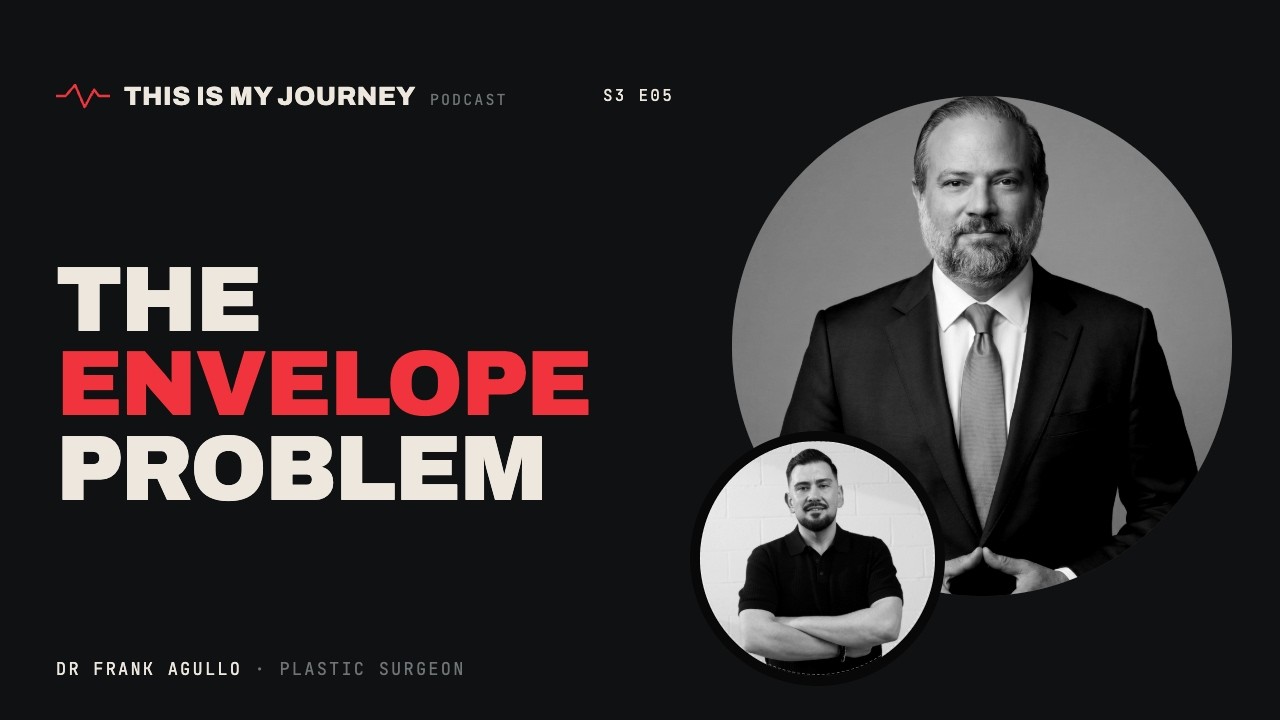
SHOW NOTES
The volume goes. The skin envelope stays. And there is a line somewhere between what a good skincare routine can do and what only an operating theatre can do, a line almost nobody in the beauty industry has any commercial interest in drawing clearly for you.
Here's something that might surprise you. Everyone assumes the weight-loss injections have triggered a tummy-tuck boom. But BAAPS's own audit shows UK cosmetic surgery actually fell two per cent in 2025, with abdominoplasty down four per cent. Meanwhile in the United States, more than 800,000 aesthetic patients were using a prescription weight-loss medication in 2024, and one in five of them had already had surgery.
In this episode I'm joined by Dr Frank Agullo, a double board-certified plastic surgeon based in El Paso, Texas, known to three and a half million people online as Dr WorldWide. He trained at the Mayo Clinic, holds certification from both the American Board of Plastic Surgery and the American Board of Surgery, and is a Clinical Associate Professor at Texas Tech's Paul L. Foster School of Medicine. He's the founder of Southwest Plastic Surgery, where patients fly in from as far as Canada and South America.
We talk about why the skin doesn't know you lost the weight the healthy way, what actually happens to the face, breasts and midsection and why they behave so differently, what "Ozempic face" really is underneath, what a topical can genuinely do and where it stops, how stable your weight needs to be before surgery is sensible, whether loose skin really retracts if you wait, and what before-and-after culture online completely hides.
SOURCES REFERENCED IN THIS EPISODE
BAAPS Annual Audit, procedures performed in 2025, published 2026
American Society of Plastic Surgeons, 2024 Procedural Statistics Report, released 25 June 2025 (GLP-1 figures from the survey component, US only)
ABOUT THE GUEST
Dr Frank Agullo
Dr Frank Agullo is a double board-certified plastic surgeon based in El Paso, Texas, known online as Dr WorldWide. He trained at the Mayo Clinic, holds certification from the American Board of Plastic Surgery and the American Board of Surgery, is a Clinical Associate Professor at Texas Tech's Paul L. Foster School of Medicine and founded Southwest Plastic Surgery.
MORE EPISODES LIKE THIS
Muscle Loss on Mounjaro: How to Protect It
S3 E6 · Dr Ash Bowden · 32 min
HRT, Mounjaro and the Heart in Midlife
S3 E4 · Dr Komal Patil-Sisodia · 46 min
Telling People You're on Mounjaro: Dating and Identity
S3 E7 · Dr Treena Orchard · 31 min
FULL TRANSCRIPT
So today on This Is My Journey, we're having the conversation, my listeners, all you guys have been asking for. So the volume goes, the skin envelope has appeared and there is a line somewhere between what a good skincare routine can do and what only an operating theater can do. a line almost nobody in the beauty industry has any commercial interest in drawing clearly for you. So here's something that might surprise you, though. Everyone assumes the weight loss injections have triggered a tummy tuck boom, but the British Association of Aesthetic Plastic Surgeons own audit for 2025 shows UK cosmetic surgery actually fell 2%. and abdominoplasty specifically fell 4% to 2,863 procedures.
Meanwhile, though, in the United States, the Plastic Surgeons Association found more than 800,000 aesthetics patients were using a prescription weight loss procedure medication in 2024 and one in five of them had already had surgery. So what's really going on under the skin? So my guest today is a professor of plastic surgery who is famously frank about it and you will get why I say that in a minute. Let's roll the intro and get into it. When I started, I was on my own.
Two years ago, I began GLP-1 medications for chronic obesity, with no real idea of what was coming. Not the good parts, not the hard parts, and definitely not the parts nobody warns you about. So I went looking for answers, and what I found was just noise, opinions, judgment, people selling something and everyone had a take and nobody had the truth. 126 pounds down I'm still on this road, still learning, still working out what maintenance actually means because losing the weight it turns out was only half the story for me. I'm Marc and this is This Is My Journey.
Every week I sit down with the people I couldn't reach back then. Leading doctors, obesity specialists, psychologists, dieticians, fitness experts, surgeons, and the people who actually understand what this medication does to your body and your mind and who'll tell you straight. And alongside them, working professionals and people walking the exact same road as you. Because their answers, they matter just as much. Just honest conversations about what this really takes.
The science, the setbacks, and the stuff you won't hear anywhere else. If you're on GLP1s or you're thinking about starting them or you're just trying to make sense of it all, this podcast is for you because nobody should have to do this alone. Not anymore. Welcome back, everyone. Today, I'm joined by double board certified plastic surgeon based in El Paso, Texas, known to three and a half million people online as GALP1s. Doctor worldwide, Dr. Frank Aguilo, trained at the Mayo Clinic, holds certification for both the American Board of Plastic Surgery and the American Board of Surgery.
And as a clinical associate professor at Texas Tech's Paul L. Foster School of Medicine. He's the founder of Southwest Plastic Surgery, where patients fly in from as far as Canada and South America. And away from the operating table, he shares candid, unfiltered surgical content with millions of Instagram and TikTok fans all over the world, giving people a look inside a field that usually stays firmly behind closed doors. So, Dr. Gullo, thank you so much for joining me today. Thank you for inviting me. I'm really excited about this topic.
It's something that I get asked all the time. So I suppose really just to start off with for anyone who hasn't yet, you know, come across your work, which I don't know how that happened because yeah, doctor worldwide, you're everywhere. So yeah, anyone that maybe hasn't seen your profiles or what you do, could you maybe start by telling us a little bit more about yourself and you know, what made a Mayo trained plastic surgeon decide to really show the public online what happens in an operating room? Sure. I think for a long time, everything, like you said, it was behind doors and there was a really...
you know, everybody questioned what really is going on there. And I think that also made the whole subject of plastic surgery gave people anxiety because they didn't know what to expect. You know, and I think it was around 2014, a few surgeons started doing some social media. A lot of them were criticized. My wife was really behind me telling me, hey, you should really... Put yourself out there and start sharing your results.
I think people would really like it. And I was apprehensive about it because, you know, that's the way that you were trained, you know, to keep it kind of behind the curtain. But I went ahead and started showing the surgeries, started showing the before and afters, started showing what patients were saying, how they were recovering. And really what it became is a way of educating patients even before they saw me. They got to know me. They got to see my results.
They got to see how everything is very consistent, how we treat patients. And I think it took the fear factor away. You know, before I would have a consultation with a patient in front of me and they were so anxious and worried. And, you know, I was giving them all this information. I think it just went in one side, came out the other. At the end of the consultation, they were more confused than before.
So now they come in and they know what's going on. They're telling me what they want. I started explaining and they're like, yeah, yeah, I know, I know. So it's a lot more comfortable. And I think patients are better for it. Yeah, no, no, totally.
If they're coming in knowing what they want, it makes your job a little easier. But yeah, you said something recently that I read and I haven't really been able to stop thinking about it, to be honest. I want to quote it. The skin doesn't know you lost the weight the healthy way. So for anybody listening, can you explain what you mean by that? Yeah, I think obviously the GLP ones have changed everything, but weight loss has been something that's happened for ages.
I think it's one of the things that with bariatric surgery or diet, exercise, but it's true that the skin doesn't know how you did it. And, you know, patients lose the weight, the envelope stays. And I think some patients kind of feel ashamed of it. Like they did something wrong. But that's not the fact.
It's just the way things work. You know, skin stops producing elastin after puberty. So it just doesn't contract like it does during puberty. So it really depends on the amount of weight that you lose, how fast you do it, and then also how you take care of yourself during that time. Are you taking protein?
Are you doing weight lifting and building muscle? So, you know, the skin is just going to react the way it does. We can't do a lot about it. We can help it in some ways, but you shouldn't feel bad if you have excess skin. I mean, it's part of losing weight, and everybody's different. I mean, you can see even with pregnancy, some women
bring right back up and it looks like nothing ever happened and some don't. And so some of it is even genetics and just the makeup of the collagen and elastin in each person's skin. So I lost 126 pounds. And I think for me, you know, there's multiple different factors. And I always say this to everybody, you know, I used skincare. I was taking protein.
I was taking collagen. I was exercising, doing weights. You know, I was trying to do everything possible. But then also... I, well, some people might disagree on the slightly younger side. So I'm 37 now, but you know, for a lot of people, you know, even genetics and age and all comes into it too.
I think I've been very lucky myself. I know some people maybe aren't just as lucky, but it's not an unlucky thing. It's, you know, it's just something that people are left with. Some people will see the video versions of this podcast, but if everybody could see your t-shirt, your hashtag stay beautiful, I think that's, that's amazing. And. There is a stigma around, I suppose, plastic surgery and, and, you know, cosmetic surgery and what, what not.
And I think ultimately it is about feeling your best and looking your best. And, you know, I'm all for body positivity and all that. And it leads nicely into what I want to ask you next. Take us through the sort of deflation story across the body. And we've kind of touched on a little bit there. So like, you know, face, breasts.
that midsection that we all hate and what actually happens to each one of those and why do they all behave so differently yeah i think that's a lot of times it's a surprise for patients when they when they lose the weight so i think everybody's expecting the midsection right to obviously get smaller decreased volume and they're expecting some skin laxity in that area and we know a lot about it because For example, pregnancy in women, you know, that's the number one reason why we do tummy tucks. But weight loss has been a big reason as well, both bariatric and GLP ones, and even just diet and exercise. We get back to the skin envelope, which has been stretched out. It's lost those connections with elastin. You can't make any new elastin.
So once you deflate just like a balloon, the outside just wrinkles, and we're going to get some contracture. It's just not as much as we would want. But I think the biggest surprise patients see is the change in their face. I think, you know, this rapid weight loss, the face doesn't have a lot of fat, but the fat that it does have is the good fat, is the baby fat, right? The one that makes you look young. So in the face, you see the loss of the fat on the under eyes, the temporal areas, the
the temporal wasting, the buccal. So, you know, we see kind of the face just melt down because it's lost all that volume, which brings it up. So that's usually the first thing they start noticing in the early stages of the weight loss. And we do a lot of things to try to, you know, help them out, obviously topicals, radiofrequency for tightening, adding volume with fillers or biostimulators like Sculptra, or even now donor fat or the patient's own fat, we, you know, we transfer it. So in the face, it's a multi-layer. It's the superficial fat, but also that deep fat.
And that combined with, you know, we're all aging anyway. You know, we have some bone resorption that just happens with age, as well as we lose fat with age and the skin loses elasticity and thickness with age. And then there's the other body parts, you know, the breast loses the fat content and And this is for both men and women, which is also surprising. You suddenly have saggy breasts, right? And that can affect you mentally, a lot of patients.
Same thing happens in the buttock area. In the buttock area, we have a combination. A lot of these patients that are losing weight fast, they're not taking in enough protein. So they're also losing weight. you know, 10%, about a quarter of the weight loss is going to be muscle mass. So the buttock loses muscle, muscle mass plus the, the fatty content.
And then we have the sagging in the, in the buttock and then some patients have it in the inner thighs, the arms, the back. So it can be, you know, it's a, it's a 360 thing. It's the whole body. It's not just, just the tummy, like most people expect. The thing that I have noticed is no one person is the same either. Every single person is different.
You know, everybody has a different concern and a different, you know, I suppose, outlook on maybe what has changed on their body and everything. I think there's no one rule really, which kind of leads me on. You went into quite a bit of detail there on the face and stuff, which is great because I was going to actually ask you about an Olympic face. And I think that's, you know, I suppose a big talking point in the media and all that. So I think it's really good to have that kind of definition for people who, you know, listen in so that they actually understand what is happening to their face and these other areas on their body.
So, you know, our sponsor for this is Elastic Skin. So it's a skincare brand built for people on GLP ones. So you did mention topicals there earlier. So what can a topical genuinely do for skin quality and where does it stop? I know, you know, my own line that I say is that, you know, topicals did help me along with a lot of other things through the journey. But whether they actually work, obviously, you're the expert here.
What's your thoughts on that? Yeah, I think you're pretty honest about the topicals in that, you know, it's not going to remove the excess skin. But we have to do everything we can to make the process the best possible. And then, of course, try to minimize how much surgery we're going to need. I think topicals definitely have a place in weight loss because of what we said. We're having less fatty consumption.
And, you know, fat is an emollient that helps with barriers in the cell membranes. We're taking less protein, which also, you know, generates collagen. And we're usually taking a lot less fluids, too. So we're, you know, dehydrated. And all those three things... are you know they decrease the moisture in the skin which makes it look older a lot quicker so the topicals really they have two functions barrier and to attract moisture and then also the antioxidants which of course keep the skin looking younger and the red noise which can help speed up the the turnover on the skin so i think the skin does help with the you know the fine lines and wrinkles makes
makes the skin appear firmer. It helps with texture. It helps with comfort because, you know, with weight loss, sometimes we also have problems with dry skin and itchiness. So all those things, I think, do benefit. And really, you know, skincare is part of any surgery that I do. If I'm doing...
even just a breast augmentation or a tummy tuck. I put my patients on a special moisturizer because when there's inflammation and there's recovery, you just lose that moisture and that really hurts you in that. No, totally. Everything you're saying there has occurred my own experience. I think there's a lot of There's a lot of mixed opinions online and you know as well as I do from doing social media, you know, you don't always know what's the truth and what isn't the truth.
I suppose when somebody does go or is considering surgery or wants to go down that route and has that, you know, how do you counsel somebody on like a timeline? operating on them, you know, is there a too soon period? Yeah, this is a tough question because the GLPs are pretty new. So we had everything really standardized for bariatric surgery. We knew that, you know, a patient would have a sleeve or a bypass and we would wait, they would lose weight for a year or a year and a half and then they would stabilize and then we would wait six months. But it seems like with GLPs, patients are losing the weight a lot faster.
They get to that goal faster and they plateau faster. So what I've been seeing is kind of a six to nine month weight loss and then about a three month stabilization until we... you know, we're ready for surgery. And, you know, what we also see is that with the GLP-1s, patients are healthier than the bariatrics patients because the bariatric patients also have that nutritional deficit. You know, we're taking out intestinal parts that absorb nutrients. So the complications are lower and the healing is better.
So what I do see is kind of a continuum. I think, you know, like you said, I would start with the topicals early on to give the skin the foundation and help it, you know, recoil as much as possible. As we're losing weight, I think the first thing patients notice is the face. And what we're doing is during that period, usually at two months is when they start really noticing. That's when we start using fillers or Sculptra. And that's when we start using fillers.
frequency treatments like microdialate with radio frequency for skin tightening just to get them through to to the later stages which you know considerably if you're losing 40 pounds i think you're going to need a surgical procedure and of course it depends on like you said some people care about the face some people care about the butt so So it's very personal on what gives the patient the self-confidence. So I think the timing is shorter now with the GLPs, but it's really something that's still cooking, right? We don't know exactly how it's going to work. And the main thing, of course, is not to bounce back, right? When you stop taking it, if we have a bounce back, then that can pretty much destroy everything we did.
And the... The fat's not going to come back in the right places necessarily. So that's something to consider. And just on that point, is there, just out of curiosity, say somebody did have that surgery and then, you know, did regain all that weight again. Like, is the skin thinner or is it more dangerous or is there none of that? Yeah, I don't think there's a huge health hazard, right, or urgency.
Of course, with the weight loss, you got healthier. If you gain it back, you know, some of your other problems might come back, like blood pressure or glucose intolerance and so forth. But the skin will keep stretching. Sometimes we do mommy makeovers and there's another pregnancy. And, you know, the body is amazing. It knows how to accommodate things.
But it does undo some of the things that we do surgically. We have to go back in for a touch up or a retitling. Yeah. So I suppose really to kind of go back to a point that you made there, how much loose skin actually retracts on its own? So say, for example, somebody waited a year or two years, is the skin really going to retract that much that, you know, they may not need surgery or are they generally, would you say, going to need surgery? Yeah, so it's hard to tell, right?
Younger patients, like we said before, are going to retract better. I think everybody retracts some, probably not as much as we would want, but, and it's also sooner than people think. It really happens in the early stages. And I think maximum a year, it's all done. And I think that's why in bariatric surgery, we waited a year. So yeah, it really is going to depend on each person.
There's type of skin quality going into the weight loss and how they take care of themselves through the weight loss. So there's a lot of components, but the tightening process is usually less than what people hope for. Yeah. You're treating people at a point where I suppose... They've done the hard bit, but they're maybe still unhappy with what they see. How do you handle it when someone wants something that surgery maybe can't give?
Yeah, I think that's the toughest part of my job is, you know, telling patients that's not possible, right? Yeah. Realistic expectations. Exactly. We have to set that from the beginning. Otherwise, nobody's going to be happy.
I'm not going to be happy. Patients are going to be happy. And, you know, it's just going to be a bad, sad story. But... Thankfully, I think with social media and the way we've been educating patients, which were, you know, less behind the curtain, I think patients are having a lot more realistic expectations. Some patients will bring wish photos and you sometimes have to coach them.
You have to tell them, well, you know, this patient you're showing me is 20 years old. You're 40. So, you know, or this patient's BMI is 20 and you're still at 30. I mean, you look much better than you did before. But. We really can't compare apples to oranges, right?
So yeah, realistic expectations. And then also realistic expectations afterwards. You know, patients that have lost a lot of weight, we do these surgeries and we're really pulling as tight as we can in the surgery. But the skin, because it's lost that elastin, is going to give again, right? So, so we lose some of the result over the first six months. And another realistic expectation is that a lot of times, six months later, we have to do a little nip and tuck to tighten things up and just get them right.
Yeah. What do you most want people to understand about surgery that the before and after culture online? completely hides because there's a lot of before and afters out there and you think that's amazing and the results are amazing and either more things that they've had done or it's not just as clear cut as a before and after in one surgery right yeah i would stay away from anybody that has that one or two or three amazing before and afters and that's it right mm-hmm You want to see a surgeon that's posting before and afters every day, and then they're all consistent and they're all getting good results. They're not going to be all home runs because it really depends, like I said, how the patient comes in. You can't get a home run out of everybody, but you can definitely get them to a better place as long as the expectations are set.
So the before and after really doesn't tell the whole story. It doesn't, you know, it doesn't tell you about the patient's psychology, if they're happy or not, right? You don't know that from a photo. Because some patients get amazing results and they're still not happy, right? They have these little things that they want to perfect. It doesn't tell you about the recovery, everything they had to go through or any complications that there could have been.
So those are, and of course, the costs the patient had to undergo and what it costs the family and, you know, just getting through the whole procedure. The before and after is a quick fast forward through all of that. But, but I think it is an important part of choosing a surgeon because obviously you want to see somebody that can consistently deliver good results. 100% done. I suppose we are getting to near the end, but what I kind of wanted to ask you, which I hadn't really preempted to ask you, but just off the back of your t-shirt and you know, your hashtag stay beautiful. Maybe you want to tell people a little bit about what that means and why it's so significant to you.
Yeah, you know, this is one of the slogans that we came up early on. And really, I think everybody's beautiful, of course, when they come in. We're helping you become the best version of yourself, right? And we're working as a team to get there. But it doesn't mean that if you don't have plastic surgery... You're not beautiful, right?
And like I said, there's certain things that make each person beautiful. And it's not always the physical, right? So, yeah, that's one of the most important things we think about here. The other slogan we say a lot is happy is beautiful. So, you know, if you're happy, you're beautiful. Yeah, I think that's amazing.
And I think it's really... It's just really positive, I think, because in a world where, like we've mentioned, you know, there is so much criticism around how we look. There's so much judgment around how we look. And I think. All sizes are amazing regardless. Your body is beautiful and you know, whether you want that little bit of help to make it look like it, it potentially did look like, you know, or a body you've never had before, I think it's, it's a really positive thing and I'm definitely within this community and.
people taking GLP ones and whatnot. Now, I think it's something that a lot more people are considering. So I really appreciate you answering the questions that I've kind of thrown at you there and really just allowing people to understand The sort of thinking that you have to go into before you would consider going down this route of actually having surgery and things. But I suppose really just finally to finish up, where can people find you? Doctor worldwide, follow your work, your platforms, tell everyone where to go and where to find you and how to get a consultation.
Yeah, so on social media, it's pretty easy. On Instagram, Snapchat, and TikTok, they're all at RealDoctorWorldwide, and the doctor's at DR, so RealDRWorldwide. And you can find me there. From there, you can probably go everywhere else. My main website is agulloplasticsurgery.com, and that's A-G-U-L-L-O. You were saying that, you know, you've done all this to educate patients and
educate people in so they know what's going to happen and i think the reason i started doing this social media was to educate patients and i think education and knowledge is power and it just it gives you more options as you go through through life and this journey yeah no definitely and i think even when i started at glp1 you know i started it here in the uk well, Manjaro specifically was only made available in sort of April 2024. So I started in August and there wasn't a lot of information out here. And I just really struggled with finding the research and what was legitimate sources and what wasn't. And I think That's why these kinds of sessions and educational content like you put out, it's so important to help inform people because like I said, you don't know what to believe on social media anymore and what not to believe.
Do you know what I mean? And I think it's so great that there's all those real life case studies that you showcase and what is actually achievable you know results wise so yeah no i really thank you so much for giving up your time today and you know for sharing your world with us and everybody listening, because I know for a fact everybody will find it really beneficial to hear your kind of perspective on it. I think everybody's on this journey together because ultimately, you know, all being on these medications, once we get to that sort of end goal, wait, that's then the next part of that is, you know, looking at, you know, if we have been left with skin, we want to improve things. And
It's so funny, the amount of people that I've actually heard that have said, you know, I'll be happy just to get to, you know, whatever weight they want to get to, or the skin doesn't worry me and blah, blah, blah. And then they actually get there and then they realize they want to look even better. I think secretly, and I know I was one of these people. They maybe never thought that they'd actually achieve the weight loss. I know for me personally, I've never achieved it before. So I never thought I would achieve it, which is, you know, that's, that's a whole other episode on its own.
But, but no, I think, yeah, all that information, it'll be really, really beneficial to, to everyone. Everybody can grab all your links and stuff. I'll have them all in the caption guys, so you can go and find more about Dr. Frank Aguio there. That's been a pleasure talking and thank you so much. Thank you so much.
I really enjoyed it and I have to sign off the way I usually do, which is stay beautiful. Stay beautiful.