


SHOW NOTES
Ninety-one per cent of people who have actually taken these medications would recommend them to a friend who was struggling with their weight. Now ask those same people whether they've told their friends they're on it.
That figure comes from a survey of nearly thirteen hundred UK adults published in BMJ Public Health. The same study found people who had taken these drugs were around seven times more likely than people who hadn't to reject the idea that they're unsafe or unproven, a mismatch the researchers themselves flagged between what the public assumes and what the people living it experience. Only nine per cent first heard about these medications from a healthcare professional. Sixty per cent first heard about them from the news.
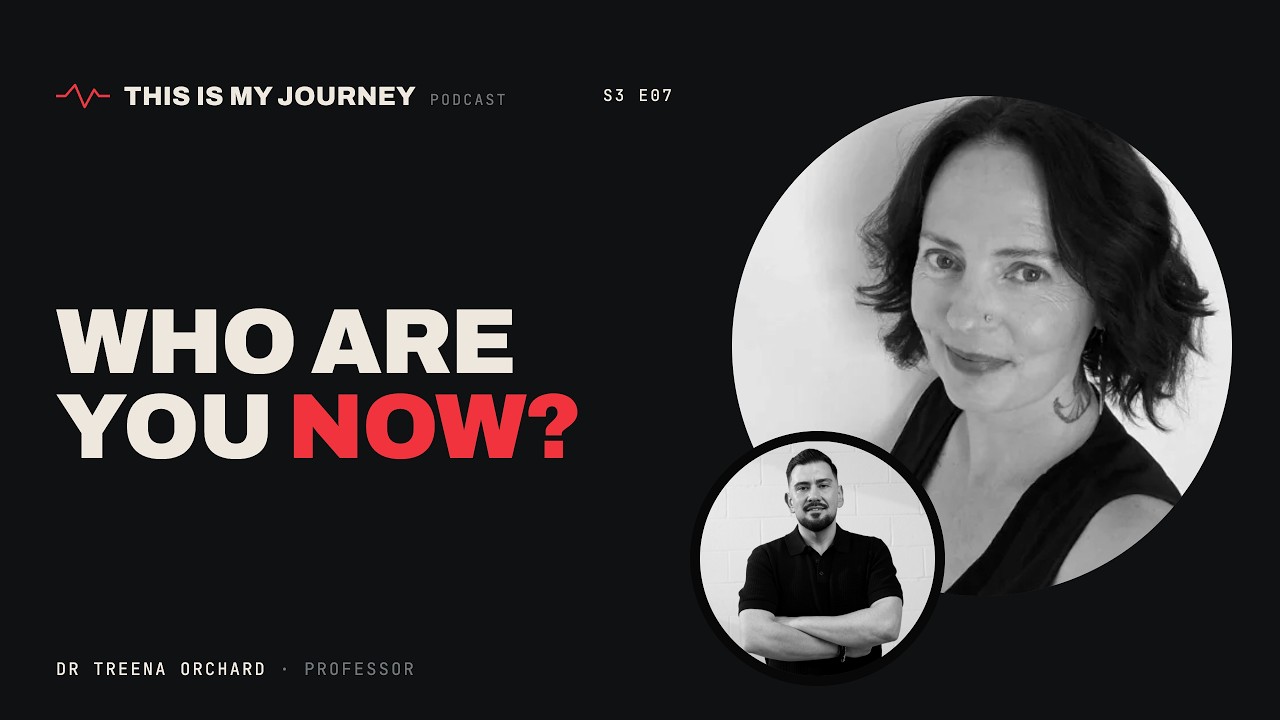
In this episode I'm joined by Dr Treena Orchard, an anthropologist, author and activist whose work on sexuality, gender and health sheds new light on how people behave in the twenty-first century. She's an Associate Professor in the School of Health Studies at Western University in Ontario, and the author of Sticky, Sexy, Sad: Swipe Culture and the Darker Side of Dating Apps. Her next book, Vulnerbro, looks at men, masculinity and vulnerability. In 2025 she was named a YMCA Woman of Excellence for Social Justice.
We talk about what happens to your sense of self when your body changes faster than you do, why identity lags so far behind the mirror, the disclosure dilemma and what people are really afraid of losing, why this particular medication has been moralised when nobody demands you disclose your blood pressure tablets, what the advertising for these drugs is actually selling, what happens inside a long marriage when one person changes and the other didn't sign up for it, how differently the world treats a body when that body changes, and why almost no men talk about any of this.
SOURCES REFERENCED IN THIS EPISODE
Auerbach N, Liu VN, Huang DR, Clift AK, Al-Ammouri M, El-Osta A. "What are community perspectives and experiences around GLP-1 receptor agonist medications for weight loss? A cross-sectional survey study in the UK." BMJ Public Health 2025;3:e002519
Rad J, Melendez-Torres GJ. "Critical discourse analysis of social media advertisements for GLP-1 receptor agonist weight loss drugs." BMC Public Health 2025;25:2996
ABOUT THE GUEST
Dr Treena Orchard
Dr Treena Orchard is an anthropologist, author and activist whose work looks at sexuality, gender and health, and an Associate Professor in the School of Health Studies at Western University in Ontario. She is the author of Sticky, Sexy, Sad: Swipe Culture and the Darker Side of Dating Apps, and in 2025 she was named a YMCA Woman of Excellence for Social Justice.
MORE EPISODES LIKE THIS
Relationships on Mounjaro: When One of You Changes
S3 E8 · Jonathan Van Viegen · 22 min
Muscle Loss on Mounjaro: How to Protect It
S3 E6 · Dr Ash Bowden · 32 min
Loose Skin and Ozempic Face After Weight Loss
S3 E5 · Dr Frank Agullo · 28 min
FULL TRANSCRIPT
Today on This Is My Journey, we're going somewhere this conversation almost never goes. So let me give you one number that says almost everything. So a survey of nearly 1,300 UK adults published in the British Medical Journal Public Health last July found that 91% of people who had actually taken these GLP-1 medications would recommend them to a friend who was struggling with their weight. 91%. Now, ask those same people whether they've told their friends they're on it. The same study found that people who had taken these medications were around seven times more likely than people who hadn't too strongly reject the idea that they're unsafe or unproven.
Okay. So the researchers called it a notable mismatch between what the public assumes and what the people actually live in it experience. And only 9% of everyone surveyed first heard about these medications from a healthcare professional at all. So 60% first heard about them from the news. So here we are, a treatment that people take in, it would recommend to a friend that most of them found out about from the media rather than a doctor. a great many of them will not admit to taking.
So my guest today is an anthropologist who studies exactly this, bodies, intimacy, identity, and the stories we tell about them. So let's roll the intro and get into it because I'm super excited about this one. When I started, I was on my own. Two years ago, I began GLP-1 medications for chronic obesity with no real idea of what was coming. Not the good parts, not the hard parts, and definitely not the parts nobody warned you about. So I went looking for answers, and what I found was just noise.
Opinions, judgment, people selling something, and everyone had a take, and nobody had the truth. 126lbs down, I'm still on this road, still learning, still working out what maintenance actually means. Because losing the weight, it turns out, was only half the story for me. I'm Marc, and this is, this is my journey. Every week I sit down with the people I couldn't reach back then.
Leading doctors, obesity specialists, psychologists, dieticians, fitness experts, surgeons, and the people who actually understand what this medication does to your body and your mind, and who'll tell you straight. And alongside them, working professionals and people walking the exact same road as you. Because their answers, they matter just as much. Just honest conversations about what this really takes. The science, the setbacks and the stuff you won't hear anywhere else. If you're on GLP 1s or you're thinking about starting them or you're just trying to make sense of it all, this podcast is for you because nobody should have to do this alone.
Not anymore. Welcome back everyone and today I'm joined by an anthropologist, author and activist whose work on sexuality, gender and health sheds genuinely new light on how people behave in the 21st century. So Dr Trina Orchard is an associate professor in the School of Health Studies at the Western University in Ontario and the author of Sticky, Sexy, Sad and Swipe Culture and the Darker Side of Dating Apps, which blends memoir and cultural critique into a bold, timely exploration of love, risk and resilience in the swipe era. So her next book, Vulnerabrew, looks at men, masculinity and vulnerability and how social media and peer dynamics shape male identity and belonging. And in 2025, she was named a YMCA Woman of Excellence for Social Justice.
Trina, thank you so much for joining me today. It's great to be here. I'm super excited about this conversation, as I've said. And yeah, I think it's one... hasn't really been talked about an awful lot within this, I suppose, topic. I'll give a bit of an introduction there to you, but for anyone who hasn't really came across your work, could you maybe start by giving us a little bit about yourself and what draws an anthropologist to this messy, intimate, deeply human territory of, you know, bodies, dating, desire?
Well, that's what anthropologists love usually. You know, we like to get in there and think about... You know, how do people become who they are? How do they view the world? What is their worldview? How does that change over time, over the life course, across different cultures, within demographics?
All of that is kind of our wheelhouse. Yeah, so I'm an anthropologist who works with different vulnerable communities or marginalized communities in my career. So folks in sex work, indigenous communities, and people with HIV and AIDS. And then more recently, I've begun to branch out not just doing academic work, but also doing creative and memoir nonfiction writing, using my own life as the lens through which to understand things that are impacting all of us. And you mentioned my book about dating apps, swipe culture, love relationships as a sober midlife woman, trying to figure it out. The experiences are unique to me, but they resonate broadly because we're all in the same kind of
cultural environment in terms of technology relationships how fast things move that kind of thing Well, I definitely think just from what you're saying there, I think there'll be so many people listening to this that will be able to relate to what you're saying here. Super excited to get stuck in and see what, you know, the conversation brings between us. So really to start off with, I suppose the thing nobody really prepares you for. So when a body changes this fast on this medication, what actually happens to a person's sense of who they are? Yeah, I think it's a really important question because especially with this medication, as you mentioned in the intro, we're hearing about it through other sources.
Like, is it even medicine? We just know it's going to change the body and like that. Okay, I'll take five, you know, because it's so symptomatic of our fast-paced environment and how so many of us in some way or another often are striving to look the same. In terms of the estet piece, there's a health reason as well. That's really important. I don't mean to diminish that.
But I think that when we get these medications, have access, we have the desire in mind, what we want to look like, how we think it might go. And then when the body actually starts to change and change quickly, our identity, our sort of biological and sort of internal way that we've known who we are and how we move through the world, how our clothes feel. It's supposed to feel great and positive and empowering, but it feels different because it's change. Change can be uncomfortable, even if it's going in the right direction that you think you want to go in. Hey, is this me? I am feeling different.
How do I articulate that? Or do I? Because a lot of people, as you know, they kind of keep quiet about it. I think a lot of people that I talk to have almost wanted to hide this from other people and you know people that are even close in their their lives and things so it's always something I've always been very honest about it and I've tried to understand why people are afraid in them aspects so yeah I think there's this real strange lag in like you said there, the outside changes in months and inside almost takes years to come to terms with. So why do you think, you know, identity
moves so much more slowly than the body does. Yeah, identity has to do with, you know, who you know yourself to be, all the different patterns, all the different people who have impacted you, you know, positively and negatively aspirational ideas about who you might be, and then kind of the hard reality of what's going on and how it might feel uncomfortable. But also, I think the body is a source of profound trauma. It's our vessel. It's our carrier. Most of us, I mean, show me someone who doesn't have any kind of trauma, I'll be like,
I don't believe that. Yeah. And like trauma, that's not necessarily the problem, right? Because life is going to be easy for most of us in various ways. But it's like, what kind of support did we get to respond to that, if any? Did anybody talk about it?
Did I share the kinds of things that happened to me personally? Probably not, especially as a younger person. You bottle it up, you bottle it up, you keep going. You're not really sure what's happening. You look around you at this really hypo-focused society that's, you know, thinness, and then it's curves, and then it's, you know, this way. And now it's like different kinds of bodies are accepted.
What about body positivity? Well, I guess that's gone. So in terms of understanding how you feel, the world around us shapes that. And it has so many different conflicting ideas and messages and models. So it makes sense that that identity piece takes a lot longer to navigate. No, definitely.
I think for me, it's something I still struggle with. I got to go and I think even now I still struggle with looking in the mirror and seeing that person. I still haven't caught up that I'm this different person now in terms of looks and all. I just, I want to check a figure here because I don't want to get it wrong. So 91% of people who have taking these medications would recommend them to a friend and yet people agonize over whether to tell anyone they're on it themselves.
What's actually happening in that gap? Like what are people afraid of losing? Well, I think they're afraid of losing some sort of credibility, right? Because we have a certain sense of what are appropriate ways to lose weight. You know, it is hard work. It is exercise.
It is nutrition. So these like very standard traditional health promotion kind of ideas are ingrained in us. And so despite the fact that we have pills and medicine, we're living in a medicalized world, there's deeper stuff about People who are fat or overweight, there's fat phobia, there is stigma, there is so much profound shame associated with larger bodies in general. Certainly there are spaces where there's inclusivity and respect and joy and love and fun. But in general, most of our society is still really, really trained on this very monosyllabic way of looking at what is a beautiful body, because it's tied up with notions of success, of adulthood, all these kinds of things.
And so when a body deviates, especially when it's larger, less so when it's smaller. But even now, I think about like Ariana Grande and other Hollywood folks in particular who are exceedingly almost scary skinny. And there's such a debate about should we be allowed to talk about other people's bodies? I think that debate and talking about it is healthy, but I still think there is a huge privilege to bodies that are smaller. Yeah, that's really, again, really interesting just hearing your perspective on that, because I think people who are bigger get, well, it's kind of, I've had a sort of mixed experience. So losing the weight, I think I've definitely had, you know, the, you've gone too far, you've lost too much, and there is that, you know, critique from people.
But then also when you're larger, I find that people maybe haven't been as honest in the sense of, yeah. You know, my health was so bad and at risk, but people maybe weren't being as vocal. I find people are more vocal the skinnier you are, if you go too skinny as opposed to the other way. So I suppose that's just been my experience, but I think it's really, really fascinating. And I think that that study in general, it found that users and non-users are almost living different realities. So with users of the medication around seven times more likely to live.
reject the idea that these drugs are unsafe or unproven. So I suppose the question then to you is why has this particular medication been moralized so heavily? You know, nobody demands you disclose your blood pressure medication or, you know, anything else that you're on. So why is this so different? Because again, kind of connected with what we were just talking about, you know, there are pre-existing ideas associated with people who are bigger. They're lazy.
Like this is, you know, it's a bit of a trigger warning because this is obviously not what I think, but this is part of the narrative and I think it's important to confront. They're accorded less social value. They're seen as contributing to society less, even though it's completely false. They're seen as being unhealthy and potentially, you know, a financial drain on society. Okay. Right.
Connected with health related issues. And so that kind of that package lends itself to a sense of it's morally OK for me to ask you questions because you represent a risk to the society that I'm a part of it. I'm a hardworking person. I contribute to and I pay taxes. Like it's kind of really bizarre if you think about it. But there is this kind of sense of entitlement where you can talk poorly about a group, in this case people who are larger, who are already kind of seen as social scapegoats or less socially valuable or stigmatized.
So that's kind of where that privilege kind of comes in with talking about bodies that are larger. And I think to your point about we hear those kinds of things less when people are smaller. You know, it's more of a sadness. It's more of a fear. less conversations about health when people are bone thin, even though they're very unhealthy as well, not just physically, but also mentally and emotionally, right? So I think those things are all kind of tied into why people feel like they have the right to talk about people with larger bodies in that way.
That's so fascinating to me just hearing, I suppose, with your background, being able to translate that. And I suppose prior to us arranging this, you know, you sent me a discourse analysis of 90 social media adverts for these medications and the language in them. is extraordinary. So confidence boost, shedding the pounds and feeling fantastic and is the ultimate reward. Embrace the new you, start an empowering transformation towards a renewed you. You know, they aren't selling weight loss, they're selling a different self and
The researchers find that those same adverts carried almost no balanced information about side effects. So as someone who studies how culture talks about bodies, what do you see in that? Yes. Well, that is a compelling example of health promotion. We are promoting, maybe in this instance, not health too much, but it's like the kind of blurry space between health, marketing, and of course, the very murky wellness industry. That is about promoting your best self.
Aspirational. Look out world, here I come. There can be nothing wrong with this except in the print that's like 0.4 large because they're legally required. But it is about choosing what to promote, drawing upon well-worn kind of patterns of marketing, you know, hitting that demographic. It is really about promotion in a more media-generated, you know, clickbait kind of way, using words that are very common right now connected with success, with happiness, with positivity. Whether or not any of those happen, they don't care.
They want to promote the image and they want to wrap it up in kind of a golden bow and not talk about things that might go wrong because that's not what they're selling. They want you to buy this product. They don't want you to think about what might happen. That's again, which is like they don't really care about your health. They want you to buy. So this is another kind of way that health, big pharma, you know, marketing and the almighty capitalist system come together.
to just like, you know, hit all these ads and make it enticing. It's very deceptive. Yeah, no, I think it's very interesting too, because I think country to country as well, with obviously laws around marketing and things. I know in the US, I don't think there's too much around that because I think ads are free to run. I'm not sure if it's the same in Canada and things, but I know here in the UK, like there's a real crackdown almost on providers and those selling these medications are able to promote them.
And I suppose that language that I've just read out is the language that they... tend to use. So it's less explicit about the medication and about almost portraying this life that you could have if you take these. And it's almost glamorized a little bit. I went onto these medications for pure health reasons. There was nothing vain or vanity related about it.
And I think that's the right use of them, but I think there is a real big hole in marketing where, and I think where these medications are almost falling into the wrong hands because of how they're glamorized. Yeah, how they're glamorized. And you made the good point, like it's being sold as lifestyle. It's being sold as aspirational. And also, as you mentioned in the introduction, a lot of these people are not accessing accurate information about these pills or from a health provider because we see the promotion of these medicines, you know, in the celebrities walking across the screens.
in the tabloids and most importantly on social media. Social media spaces are now like just rife with all kinds of health and social products that might not be run through a physician or a clinic at all. And it could be run through a private supplier. You don't even have to have any kind of doctor's note. Just come to me, bring your pounds, bring your dollars, bring your whatever. And we'll make it happen.
So there's that kind of sneaky way as well that is just sort of amplifying the lifestyle and the social piece to the detriment or silence of the different kinds of health implications. Yeah, no, 100%. And I think that's a whole other episode on its own, I think. Like there's so much around it that I think, you know, it'd be really interesting to dive into. But yeah, I suppose following on from that, you know, so much of the coverage is about new relationships and dating. What about existing ones?
So, you know, the long marriage, the 20 year partnership where one person changes and the other didn't sign up for, you know, their partner maybe losing all this weight. I think that's a great question. And I think it is something that we don't see really at all focused on. It's kind of like young people or people getting back in the dating, you know, blah, blah, blah, blah. But for longstanding relationships, whenever any one of the partner changes for whatever reasons, it's going to create a bit of disequilibrium.
And it's it could be seen as an opportunity to come together and talk about who we are as a couple, you know, what. Depending on the communication style of each couple, it might not necessarily lead to a huge kind of disruption. There might be a mutual respect. Okay, you do you. I'm just going to sort of do me. But I think that we know from a lot of the research and maybe from anecdotal personal insights that when there's a change like that, especially to the body, and it's so personal, it's so personal.
It's going to impact how they feel about themselves. So naturally, it will impact the way that probably they feel about their partner and the relationship that, you know, unless you don't have really kind of good pre-existing communication styles or patterns or are willing to be vulnerable with each other about these kinds of sensitive things, it can really create a lot of problems and distance. And, you know, the partner who is losing weight might feel really unsupported. And the partner who is sort of as was might feel like, they are less desirable to their partner. And so it can really, you know, bring into the open a lot of new things that might be seen as a conflict or a challenge.
But again, depending on how you relate to one another in your partnership, it doesn't necessarily need to lead to a huge downfall. I guess either way, it's going to generate new conversations. And, you know, the outcome is going to depend on that particular couple. Yeah. And I suppose then conversations that you're mentioning there, I suppose that that's a healthy relationship, having them conversations. And I think that's probably an important part of that.
How does the way other people treat a body change when that body changes? And what does it do to someone to realize how differently they were being treated before? Yeah, I think it can bring a lot of things into focus. You know, sometimes the way that we were treated before this kind of change might not have been all that great, or it might have been lovely. You know, who knows? But once there is a change and a difference, it makes you question what happened before.
And not just in yourself, but also in your social environment. So, you know, your professor might you know, inappropriately say, wow, don't you look great? Wow, what did you do? Like, let me in on the secret. You know, sometimes it can be framed as kind of this purely positive, kind of in a jokey way, you know, but again, it's like using someone else's body as an opportunity to talk about.
you know, they're themselves, which is kind of uncool in a lot of ways, but it's so common, right? And I think that, again, it's similar to how we were talking before about the impact on relationships. It can open up an opportunity to talk about, hey, did you think I was fat before? Or did you think I looked bad before? Or, you know... Why do you think I look so much better now?
You know, is it because I look more like you? So it can also contribute to people being silent. If they can see and feel how people are treating them, even if it's positive and they are in a smaller body, which was part of the reason for what they were doing, or they just feel better because they're healthier. It can be alarming and it can be it can make someone feel like sort of insecure or not sure about not just the positive changes that are happening, but about, you know, why do people need to treat me differently because of what I look like? So again, bringing into focus our obsession with appearance. Yeah, again, like I said before with that previous question, I think there's a whole other deep dive that could be done on this too.
I think it is a really fascinating area. And I think that's where anthropology really interests me too, because, you know, I suppose for me and my background, I did a slight anthropology module in university. And I think it was always something I think if I hadn't went down the route I went down, I probably would have went down this just out of a pure interest point of view. I think that's what you've said there is just. real food for thought for people listening.
So, you know, you have a new book coming out. And so your next book is about men, which I think obviously a lot of listeners here are women, but there are men. Your next book, it is about men, about masculinity, vulnerability. Men are a growing part of this weight loss story and almost none of them talk about it, like I've just said. So, you know, what do you think is going on there? Well, you know, I think that a lot of the silence around men feeling confident enough to voice their experiences and contribute to these really important conversations has to do with what we know about men don't really talk about their health.
They don't often access providers in the same way. They're not raised to care about themselves. They're raised to care about other people. You grow up and you be a man for other people. That is across the board. You know, I've interviewed 30 men and 20 thought leaders.
And these are very traditional notions of masculinity that have been around for a long time. And so that naturally precludes men from thinking about themselves as humans. unique, potentially sensitive, scared, vulnerable people, those emotions are not on the table. You're supposed to be strong. You're supposed to be solid. You're supposed to be quiet.
Don't make trouble. Certainly don't cry. So it makes complete sense why men are not talking about it. But I think that's why, you know, this is such an important podcast and why it's so successful, Marc. That's not just because you're awesome. Because you're a man talking about these things with care and sensitivity and in a way that's encouraging.
I think, and reflexive. And we know that at least in hetero relationships, a lot of times men rely on their female partners for health-related stuff and emotional support. And you just said a lot of the viewers are women. And you know what? That's okay. We can start there.
And maybe some of these women can share with their male partners or friends, co-workers, relatives, etc. And that's how we can sort of start to make an impact. But I think it's really courageous what you're doing, and more men need to talk about it. more men yeah about it i think that's what has always inspired me to continue doing what i'm doing and sharing my story just because i think growing up you know i suppose male role models in my life were if i look at any of them without naming any of them all of them afraid to contact their doctor afraid to show emotion afraid to just let anyone in to see that vulnerability inside. And I do think society is changing a lot more men are becoming a lot more vocal in terms of how they feel and express themselves.
And I think that's only a positive thing, but I think definitely there, what you were saying, anybody that is listening that maybe is female and does have them partners, definitely the encouragement there is really important to help men share that side of them that they maybe wouldn't normally do. Yeah, because they want to talk. Yeah. But they feel scared not only to talk about their bodies and stuff, but in this really fiery climate, talking about anything that matters to them that has a sense of vulnerability. I think a lot of men, and rightly so, are scared of being shut down. Not you.
Not now. You've made your bed. Now it's, you know, there's really negative ways. A lot of anti-male sentiment. That doesn't mean that what some men aren't doing is not horribly wrong. These things happen in tandem, right?
You can care about men, but you can also be critical of what some of them are doing, you know, and finding ways to remind us of that. You know, we don't have to be so black and white about things. You know, we live in the gray. So how can we think about having more nuanced conversations that can help people who are, currently really being silenced, right? And it's, you know, for men to feel more confident and less vulnerable, it's only gonna have positive effects in every single relationship they have, which is another reason why I'm writing this book.
Yeah, I completely agree. And yeah, I think that's a super important sentiment to echo. You know, you made a point to me that I want to give you really proper room on. So that qualitative research has a great deal to offer here. So most of what gets quoted about, you know, these medications as trial data, survey percentages and something different. funded by someone with a product to sell.
So what does actually sitting down and listening to people reveal that a survey could never show? Yeah. In my line of work, we often talk about qualitative, quantitative. Quantitative is the surveys, the big random control trials and qualitative arts-based work, focus groups, individual interviews, lots of different kinds of methods there. And that's where I live is in the qualitative house. And I think one of the huge benefits is when you're sitting across the table from someone who you usually don't know, often we do research and these people are strangers,
Even just that sitting across the table or more likely across the screen, you know, you're telling that person that you think that they're important and that they have something valuable to contribute and that you are happy to spend time with them. That's powerful. And I think when qualitative research is done right, I don't mean to say it's always empowering because often the things that are done in qualitative spaces are more complicated, sensitive, taboo, nuanced things that really only safe, inclusive conversations can harness well. But it usually does lead to some really powerful therapeutic outcomes. You know, I didn't know I was going to talk about that or I haven't talked about that with anybody.
I hear that a lot in my different projects. And so as a researcher, knowing that someone feels safe, is just, you know, that's the five star kind of reward, you know, and it feels lovely to connect with another human being about something that you both think matters. Dude, like, wow, that's just, it's awesome. You know, it's why I just, I love doing that kind of work. And, you know, it's not, it's a bit more complicated, perhaps, in terms of the analysis, you've got the transcript, you've got to figure out what it all means.
But that's what I'm trained to do. And that's like what has had a really joyous and powerful impact on my career and the people who I've had the opportunity to I think that the work that you're doing is like super important and there's real value in it. And I think, yeah, just keep doing what you're doing because you're doing amazing work. Thank you. We're coming to the end now, but it's been so, so insightful, all the insights there that you've been able to share with us.
Where can people find you and follow what you've been doing? Do please tell everybody. Okay, wonderful. So one of the first stops that people might want to make is my website, which is just trinaorchard.com. On the socials, I'm a Gen Xer, so of course I live on Instagram. Also LinkedIn.
I do have a sub stack. It's called Gotalite. And in terms of where people can find my articles and interviews that I'm involved in, that's all on my web page. So that's the best place. And there's like 200 and something. And there's podcasts, like go crazy.
There's a contact me, you know, spot there. You can also reach out to me by email. email. But my book, Sticky, Sexy, Sad, Swipe Culture and the Darker Side of Dating Apps is available wherever you buy books. In terms of specific UK booksellers, probably Amazon or maybe an indie place and you can order it. It's also on Audible.
I read it. And Vulnerbro is a book in Motion. It's not published yet. I've just begun to sort of do the analysis of the interviews, but I'm writing a few magazine pieces that will sort of chronicle some of my highlights. So that'll be posted on my website as soon as they're available.
Well, that's super exciting. I'll definitely be looking out for that because I'd be really keen to read that one for sure. But yes, everything you've mentioned there, I'll also link in the caption of this as well. So everybody, if you never picked up just where to go there, it'll all be in the caption below. So thank you so much, Dr. Trina, for joining me today. I think it was just super insightful.
And yeah, I appreciate you giving up your time and sharing all those insights with us. Yes, thank you for asking. And feel free, anyone who's listening, to reach out to me. I will get back to you. I'm good like that. I love hearing what people think and their own experiences.
You know, it's all really important. Thank you so much.