


SHOW NOTES
A whole generation of people are coming off GLP-1 medications, looking in the mirror and wondering what to do about what they see.
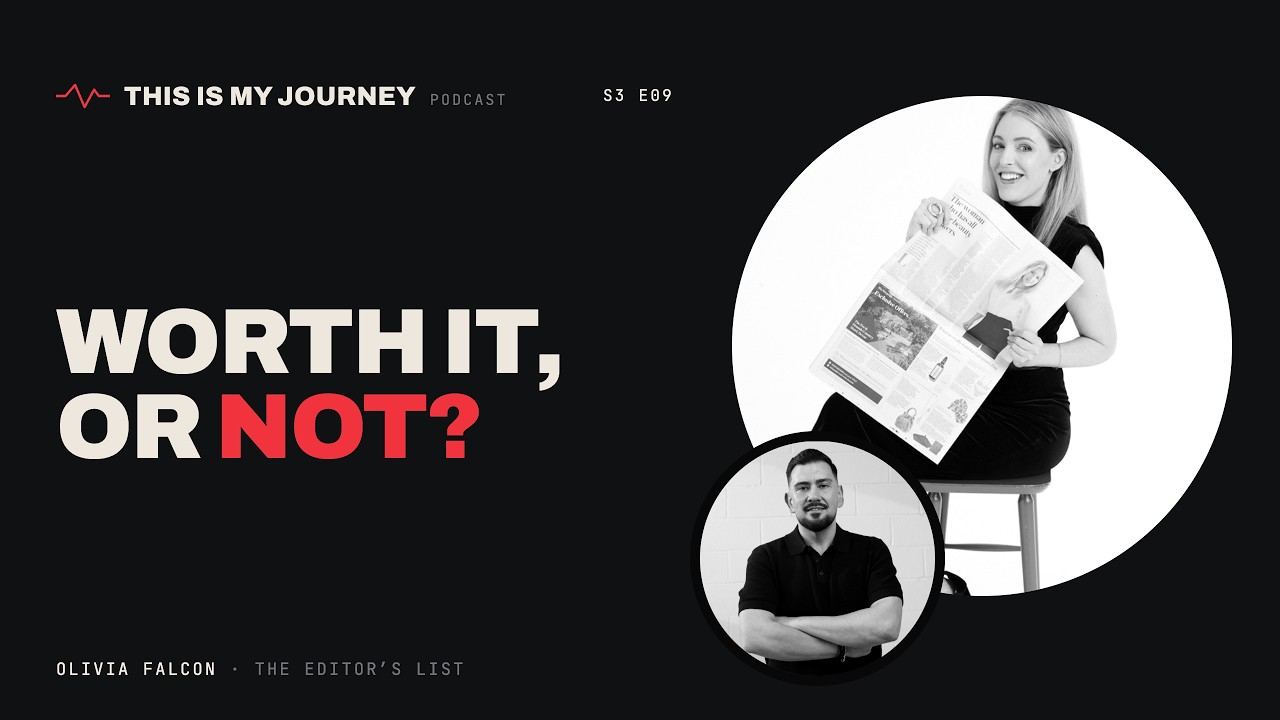
In this episode I'm joined by Olivia Falcon, an award-winning journalist and the founder of The Editor's List, the UK's leading cosmetic concierge. Olivia is the former health and beauty director of Tatler, where she edited thirteen of the Tatler Cosmetic Surgery Guides, building an unrivalled contact book of the world's best aesthetic and wellness practitioners and personally road-testing very nearly every non-invasive treatment out there. She has worked at British Vogue, is a contributing beauty editor at Country and Townhouse, and writes regularly for The Times, Condé Nast Traveller, The Daily Mail, Grazia and The Telegraph. She hosts The Editor's List Live in London, sits on Annabel's wellness committee, and has spoken openly on ITV's This Morning about her own experience with Ozempic and Mounjaro.
We talk about her own journey and what surprised her, what genuinely works for a face that has changed after significant weight loss and what is being oversold, what is actually worth paying for and the most common waste of money she sees, how to vet a practitioner and the red flags that should make you walk straight back out, what separates the very best practitioners from the merely competent, how honest aesthetic content and endorsements online really are, and where the line sits between looking after yourself and chasing something that isn't achievable.
CONNECT WITH OLIVIA
🔗 Website: editorslist.co.uk
📸 Instagram: @TheEditorsList
🎟 The Editor's List Live: editorslist.co.uk/events/ell27
ABOUT THE GUEST
Olivia Falcon
Olivia Falcon is a journalist and the founder of The Editor's List, a cosmetic concierge. She is the former health and beauty director of Tatler, where she edited thirteen of the Tatler Cosmetic Surgery Guides, and she has spoken openly on ITV's This Morning about her own experience with Ozempic and Mounjaro.
MORE EPISODES LIKE THIS
Relationships on Mounjaro: When One of You Changes
S3 E8 · Jonathan Van Viegen · 22 min
Hair Shedding After Rapid Weight Loss: A Dermatologist Explains
S3 E10 · Dr Aamna Adel · 36 min
Telling People You're on Mounjaro: Dating and Identity
S3 E7 · Dr Treena Orchard · 31 min
FULL TRANSCRIPT
So today on This Is My Journey, we're talking about who you can actually trust with your face and aesthetics. And it matters more than ever right now. A whole generation of people are coming off GLP-1 medications and looking in the mirror wondering what to do about what they see. So Who do you actually listen to? My guest today has spent her career building the contact book everyone else wishes they had.
So this is going to be an exciting one for everybody that's getting to near the end of their journey. So let's roll the intro and get into it. When I started, I was on my own. Two years ago, I began GLP-1 medications for chronic obesity with no real idea of what was coming. Not the good parts, not the hard parts, and definitely not the parts nobody warned you about. So I went looking for answers and what I found was just noise.
Opinions, judgment, people selling something and everyone had a take and nobody had the truth. 126lbs down, I'm still on this road, still learning, still working out what maintenance actually means. Because losing the weight, it turns out, was only half the story for me. I'm Marc and this is This Is My Journey. Every week I sit down with the people I couldn't reach back then. Leading doctors, obesity specialists, psychologists, dietitians, fitness experts, surgeons and the people who actually understand what this medication does to your body and your mind and who'll tell you straight.
And alongside them... working professionals and people walking the exact same road as you because their answers they matter just as much just honest conversations about what this really takes the science the setbacks and the stuff you won't hear anywhere else if you're on glp ones or you're thinking about starting them or you're just trying to make sense of it all this podcast is for you because nobody should have to do this alone not anymore Welcome back everyone and today I'm joined by an award-winning journalist and founder of the Editor's List, the UK's leading cosmetic concierge. Olivia Falcon is the former health and beauty director of Tatler where she edited 13 of the Tatler cosmetic surgery guides, building an unrivaled contact book of the world's best aesthetic and wellness practitioners and personally road testing very nearly every non-invasive treatment out there herself. She's worked at British Vogue.
She's a contributing beauty editor at Country and Townhouse. And she writes regularly for The Times, Condé Nast, The Traveller, The Daily Mail, Grazia, The Telegraph, all the big ones. She's hosted the Editor's List live in London, sits on Annabelle's Wellness Committee, and she's talked openly on ITVs this morning about her own journey with Ozempic and Manjaro. So Olivia, thank you so much for joining me today and giving up some of your precious time to speak to me and everybody listening. Well, thank you so much for having me. What a pleasure to be on here.
This is such a fascinating topic and one that I've been writing about a lot. So yes, I'm very excited to get into this. I'm so, so, so excited to have you. And yeah, you know, for anybody that is listening, there's not a better person right now to talk about all this stuff. So for anyone who hasn't come across you, the editor's list, tell us maybe a little bit more about yourself and what made you go from editing the Tatler guides to building a cosmetic concierge of your own. Okay, well, I started my life as a journalist, my professional life.
I actually had the Deva Was Prada job. I worked for Alexandra Shulman, the editor of British Vogue, as her assistant. And rather than spending most of the time shuffling around the shoe and the clothes cupboards, I was in the beauty room. always obsessed with the products, the makeup, the perfumes. It was just an incredible world. I then went on to be the beauty director of Tatler magazine for about 10 years, where back in 2003, we started writing an aesthetics and cosmetic surgery guide.
So I really had a front row seat. to watch this whole industry evolve. And one of my top jobs was I had to write a directory of the country's top cosmetic doctors, dermatologists and surgeons. So I built this amazing black book of contacts up. Fast forward 13 years later, people would be calling me, asking me, Olivia, where do I go for filler injectables? Or who do I see for teeth whitening?
So this is how the editor's list was born. We call it a cosmetic concierge. So it's a service for basically anyone who is confused about the world of aesthetics and they want personal, honest, transparent recommendations of who's the best and the safest pair of hands to see for anything from facelifts and tummy tucks through to smaller tweakments. Yeah. And I think once you get to the end of that journey, people are starting to look at all this stuff.
And I think what you have there is an amazing resource for people. And I think thought you would be a fantastic guest for everybody to listen to and gain a lot of your insights. There's also a very personal relationship to the medication for yourself. So you've been very open about your own experience with Osempic and Manjaro. What was that actually like for you and what surprised you?
How did your journey go? So for all the female listeners out there, I think they will relate to this. So I'm currently 52 years old. I would say when I was about 48, I started getting into something called perimenopause. I got the usual symptoms, the hot flushes, problems sleeping, but also very common one. I piled on a ton of weight.
I wasn't doing anything particularly differently. I was eating the same. But I gained, I would say, a good 10 kilos. And it was kind of really impacting my life in so many negative ways. I had constantly quite crippling lower back pain. As I'm in this business, I went to see a functional medicine doctor and did a range of blood tests.
I did something called the Dutch test to really have a deep dive into what was going on. And I was told that I was pre-diabetic. I had a cholesterol reading of 6.6, which is fairly high. He gave me literally a suitcase full of supplements to take. I upped my time at the gym. I was very mindful about what I was eating.
I did get some improvements. But like with a lot of busy people, I constantly got derailed by a really quite a chaotic work life. Like no day is the same for me. I can be on a train up to Glasgow. I can be on a plane to New York. And so...
Keeping quite a complicated supplement routine going can be quite difficult. I met a friend who had been going to see Dr. Wendy Denning, who runs the health doctors in London. So I booked in a consult and I went down what I would call a responsible route with weight loss medication. So I had a full medical health assessment and blood test. And then I started on a Zempik. So this was back in April 2023 when I started doing this.
Manjaro wasn't available in the UK market. And I did what I call a low and slow dose. So I don't know how it is for people now, but back then they would give you your sort of lowest dose. And then they would encourage you every month to double down and go to a higher dose. Now, what I've kind of found subsequently is. that I personally think some of these weight loss medications are overused and overprescribed.
And the side effects that people talk about, the nausea, the diarrhea, the constipation can be avoided if you go on a more conservative approach. I also think losing weight, not quite so quickly. So I did this, I got the bulk of that 10 kg off, I would say in about nine months, I find it just all much more sustainable and it's kinder to your skin as well, which we'll talk more about later. Because skin laxity, when you lose a lot of weight, is obviously one of the key problems. But yeah, it was a game changer for me.
I didn't have any of those horrible side effects. I was on a Zen pic for about a year. Then I took a break for about three months. The weight did creep back on. So I decided to try Munjaro. I've been on Manjaro a couple of years now, maybe a few more.
And yeah, it really suits me. My blood tests have showed that my cholesterol has gone down. I'm no longer in the pre-diabetic zone. With the weight, also, I got rid of the lower back pain. I am a champion because I think they can be life-changing medications. So you were about a year before me with OSEMPIC or whatever.
And I think the regulation even has changed a bit since then too. And yeah, I would totally agree with what you said, that point you made about people being prescribed. Back when we started, you were encouraged to go up almost every month into that next level. And that's really not necessary where we are now in this world. And I'm a huge advocate like you are in the sense of finding what works for you and maintaining on that. And I think that's where I am too.
It's such a taboo subject, I think, taking these medications. I don't know why, because it's not taboo to take blood pressure medication or anything like that. But it's about what you said there, about using them responsibly and it being used for the right reasons and not the wrong reasons. So thank you so much for opening up and sharing your story, because not everybody likes to do that. So I think it's really great. reducing the stigma when people do open up and especially people like you and others that do have a platform and want to showcase that because i think it really really helps you document that you've road tested almost everything i suppose when i when it comes to these sort of non-invasive aesthetic treatments and i personally am curious so if someone has lost a lot of weight and is unhappy with for example their face
What genuinely works and what's being oversold to them right now? Well, I think every week I get a call from the Daily Mail saying, oh, can you write an article for us on the ZenPic face or a ZenPic skin or a ZenPic body? Because it's such clickbait, isn't it? Everyone ages differently and everyone loses weight differently. And the sign of weight loss can show up on someone's face in a very different way. So I don't think we can blanket say what works and what doesn't.
I'm going to generalize here. From the clients I see at the editor's list, where they come and see me and they say, oh, I've lost a lot of weight. My face has fallen. Usually we're looking at the jowl area. You've got quite a lot of loose skin and the jowls have got much more pronounced and the neck has really gone. Stringy neck.
Then also it's usually the eye area. You either have a hollowing in the eye area or you can sometimes have a bit of a prolapsed fat pad, which gives you sort of a bit of a hollowing and then a bit of a bump and attractive shadowing around the eyes. The upper lids can come down and look a bit hooded. And then the mid face, the cheek, can also sort of descend and you can get much more of these nasolabial folds that more pronounced marionette lines. Weight loss shows up in different people. Now, back in the day, when we had lines and wrinkles on our face, the old school approach was to chase it and to stuff your face with filler.
Since then, I think everyone jumped on the bandwagon and inappropriately doctors used filler. And you've got the pillow face and the puffy face. And in the last couple of years, we've been writing, is filler dead? You know, filler is awful. Hyaluronic acid injectable facial fillers are not awful. And I wouldn't say they're dead either.
Where used appropriately, they are very, very helpful. In terms of like a face that's lost weight, if you need to add volume, they can be used to help with, you know, restructuring a little, giving a little bit of volumization to the cheek area. You can, along the jawline as well, tighten up a jawline a little bit. Fillers are never going to replace a surgical facelift, which I think, again, sometimes clinics overpromise patients what these things can deliver. And sometimes people are delighted with a little change and then they want more and more of it. And they kind of, it's called perception drift.
which is when, for example, you might feel a lip or you might feel a cheek and you like the results of it and you look slightly different. But then you take that as your sort of benchmark, as your new normal. And you want a bit more and then you add a bit more and your perception from where you started and where you're going kind of drifts. And that's, I think, where people get into problems. Practitioners have this a lot because if they inject, over-inject all their patient cohort, their idea of what looks good and what doesn't has drifted significantly. I think sometimes in a deflated phase, you can add a little bit of hyaluronic acid filler to make yourself look slightly better.
I would say better. I think that there's a new generation of biostimulating injectables, which are very helpful as well. So these work, they don't fill your face, but they signal the cells in your body to create more collagen and elastin. It's like the scaffolding under your skin, which gives you a little bit more structure. Again, these improvements, these tweakments give you about a 20 to 30% improvement. very best.
There is a surgical intervention. So if your neck and your lower face are droopy, the gold standard would be a deep plane neck and face lift where you would have incisions, the surgeon would go into the deeper plane of the face and would lift the SMAS, which is a muscular tissue that runs across your neck and the lower part of your face. And that's tweaked and pulled. So you would get a proper lift and you would get about a 90% improvement. I think there are a lot of energy devices out there. The latest one to come over from South Korea is one called Zerf, which uses radio frequency.
I tried that and yes, I did actually notice I was feeling incredibly tired. I had really quite bad pronounced eye bags and I did notice it did give me an instant pickup. It's meant to work over a number of weeks. It's stimulating collagen and elastin. So I'm about three weeks post-treatment.
I'm going to keep an eye to see how it goes. There are other treatments that use ultrasound. Some people get a bit of a result and other people don't. And I think, again, doctors need to pick their patient. These devices and machines are good for people that maybe would never consider surgery, but to get a little bit of a result. But again, a lot of times these things over-promise.
You're asking people to spend a lot of money for sometimes not much of a noticeable difference. Yeah, well, that actually leads into the next question that I really had while you were talking about that. Let's talk about money because this industry is brilliant at separating people from it. What's actually worth paying for and what's the most common waste of money that you see? Okay, so I think the most common waste of money is people trying to save their money and go for bargain basement deals on aesthetics.
Okay. That is a false economy. If you're going to go and do any of these treatments, please, please go and see a medical professional. And by that, I mean a doctor, a nurse, some dentists have retrained to do aesthetics. That's okay. What's not okay is going to see your friend who might have done a two-hour course on injectables
With all of these treatments, you can run into problems. And even the best doctor and the best surgeon have complications. And if they say they don't, they're not doing surgery or performing treatments. It's a fact. But the thing that you need to consider is that, let's say you're one of the very unlucky people that has a problem. The person that's injected you is the person you're going to go back to and say, I've got a problem.
Now, if they're not medically trained, they might not be able to spot warning signs fast enough, which can lead to really terrible things. For example, some people are offering things like quite deep thread lifts going really deep into the skin that can get infected. They're offering liquid nose jobs where you're injecting hyaluronic acid filler around the neck. the nose area to change the shape and people can go blind. People can get something called tissue necrosis where they inject into the blood vessel and they cause the death of the tissue and your skin goes black and that's a massive problem. They need to dissect and take out skin.
So don't want to scare people. Well, actually I do want to scare people. Obviously, the clinics that are run by what I would call lay people who don't have medical training are often offering much better, you know, deals. But please don't do a deal on your health or your face. I had a lovely lady, I have a client and she called me in a massive panic a couple of Fridays ago. Her 32-year-old daughter had gone for one of these deals and had had some biostimulatory injectable injected all over her face and around her eyes and had had a
Terrible reaction, an anaphylactic reaction. She was rushed in an ambulance to hospital. Her whole face swelled up. Her eyes were pretty much closed shut. She did two intravenous steroid drips. She was on steroid pills for a week.
She had to take a week off work. I've actually, we documented this on my Instagram, but, you know, she was drawn in by the deal and then ended up having to spend hundreds more pounds trying to correct it because now she's got pigmentation around her eyes, lacks skin where her eyes have swelled. So it's very important in aesthetics. To have a medical professional as someone that if there is a problem or if they mess up on your face, they are accountable. There are people like the GMC that they have to report to. It's so crazy.
It's so unregulated here in the UK. If you go and see a practitioner with no medical experience, they're not accountable to anyone. Why is that so unregulated? I mean, we have some great institutions like the British Beauty Council that are lobbying government continually to put some proper regulations in place. I know a lot of people think, you know, aesthetics is mainly a female market. Do they not care about female health or wellness?
It's a money making machine, isn't it? All these clinics are making a lot of money and they're probably paying taxes. So... go figure. But there are a lot of very, very decent people in the beauty industry who are really trying to push the envelope forward to get to make real change. But at the moment, we're just not there.
And it is a bit of the Wild West. So if you want to go down the road of rejuvenation and go for the injections and the machines and the surgery, you really need to do your due diligence, or you can come and see someone like me who will do it for you. The big thing there and what you said, I think, is you don't want to play with your face or your health. I just can't fathom how some people just like to go to like little Sue in the corner shop or whatever to have these things done. Like, it just doesn't make sense to me why somebody would want to. go down that route just to save a few pounds is how you look really worth that you know you could end up disfigured or all them things that you've just said there i just i can't process why some people would want to to go down that route i guess and it does happen and there's so many of them horror stories out there when
Like you said, every day we're hearing about those botched cases. So how on earth does that happen in this country? And what does it really tell us about the state of regulation? You know, there's a long way to go with regulation. I would say for anyone that's approaching this, I would make sure that your practitioner has some kind of medical qualification. I would ask to see that qualification.
You can also... check on the GMC, which is the General Medical Council. All doctors have a registered number and you can look them up and you can see if there's been complaints or, you know, anything against them. For nurses, there is the NMC and there is an organisation called BAMAN. which is the British Association of Medical Aesthetic Nurses. For surgeons, the place to check is something called BAPS, which is the British Association of Aesthetic Plastic Surgeons.
But yes, I think credentials count. And that's, at the end of the day, what you're paying for someone for their experience and their expertise. And that is priceless. Yeah, I think it's a bit of a wild west when it comes to, you know, that unregulated approach or whatever. So yeah, for me personally, I just wouldn't want to be risking any of my health or my beauty right now.
You're great. Have you done anything, Marc? I've had a few treatments and I've had some, what's the name of it now? Structura done. Profido Structural. Profido, yes.
Yes, yes. So I've had that. That's great for that. Yeah, I've also had, I've had a little bit of filler since I've lost the weight, obviously, because I did lose quite a bit of weight in the bottom part of my face. But again, who I use is BAM-AN registered and with her... One of the best ones here, I would say, in Northern Ireland.
So yeah, I think it's all about checking out whoever it is that you go to. I was really interested in just what you were saying there about the Zurf. Yes, yes. It is a Neeson. It's not cheap. I think it's about £2,500 a treatment.
I was obviously gifted my treatment because I get to try these different treatments. I'm writing an article, a review. They told me a couple of things. They said, so this is the one that Kim Kardashian, I think she took a trip, didn't she? to South Korea and she kind of went beauty shopping or treatment shopping and Zurf was the treatment that she did a post saying this is the greatest laser. Well, it's not a laser.
It's a radio frequency skin tightening device and apparently there's no downtime and it's absolutely painless. Well, it's a great It's not painless. I found it quite sort of a little bit ouchy. You're meant to drink a lot of water before you have the treatment because the idea is that hydrated skin cells, the radio frequency current is much more comfortable passing through hydrated skin cells than dehydrated skin cells. And...
I had just drunk one cup of coffee and I had not hydrated well enough. So that could have been my pouchy. It's like an electrical beep. It's a handheld device on bony areas. So on your jawline, on your forehead, I found it really quite spicy, I would say. But it is true.
There is zero downtime. Honestly, there is no puffiness, no bruising, no swelling, no redness. And I looked in the mirror. I went in there. As I said, I had... been doing one of my things where I had worked quite late and then to relax, I had watched about four episodes of something on Netflix and not really got to bed till about one and then got up at six.
I'd had a five hour sleep before I was caffeinated. I was looking quite grey and tired. And honestly, I get bags under my eyes, my jawline. I've got these before and after It was impressive. And I did notice a difference.
Whether it's £2,500 impressive is up to, you know, individuals. Yeah, I suppose how long it lasts. We'll tell. Well, it's meant to last a year to two years. Again, how do you measure this? Everyone's anatomy is different.
And maybe the person that's going out on a daily jog, their face is going to age a bit faster than the person that's lying down on the sun lounger with SPF and a hat and being very relaxed. I don't know. Yeah, just always curious to see reviews and do they live up to the hype? And is it just hype or is it true? So that's really interesting. If you've tried all therapy or softwave, I think ZERF is probably delivering...
pretty good result but it's less uncomfortable than the other two I mentioned I think it's quicker faster I was I was quite impressed so after you've lost lots of weight so the face things like hollowing under the eyes I would probably avoid putting filler under the eyes personally because you have your lymphatic system under your eyes um Fillet migrates, it just does. I mean, even if you put it very deep and you put it on the bone, because you are losing bone density as you age, your eye sockets are getting wider, your muscles are atrophying, your fat pads shrinking and sinking. It's going to move and that's why people get lumpy and bumpy. And because the eyelid skin is about seven times thinner than other skin on the face, there are some newer treatments coming out. Polynucleotides, again, the jury's a little bit out.
Some people absolutely love them. Some people said, it didn't really work for me. I have found with my clients, people who have got the dark circles, polynucleotides really do help with that. There is also a really interesting product by a brand called ABG Lab, which are peptide injectables for aesthetics. And they have to get CE marked to be approved for use in Europe, although we're not part of the European Union. But some doctors are starting to use these injectables and they are very good.
There's one called Miso Eye, which is very good at rejuvenating the eye area. It does the opposite to a filler. So it increases lymphatic system and it strengthens the capillaries. So it's basically smoothing crow's feet. It's reducing dark circles and you can inject it really superficially up to the eyelids. And it's kind of just giving you a sort of
fresher look around the eyes. The brand also has one that is very good for melasma and sun damage called misoxanthin, which contains a peptide that works on breaking down brown spots used in combination with a laser. It can be very helpful. But a lot of people have come to see me asking about body, what to do with their body after massive weight loss, because they have an apron of hanging skin on their tummy. Their boobs have... dropped.
They've got the awful, the dreaded bingo wing. I've got a bit of bingo wing with the wobbly arms. And one thing that I have seen that I am genuinely impressed by, it is a surgical device. It looks a bit like a knitting needle. It's called Quantum by InMode, which is a device, you make a tiny little incision, let's say under the arm. and you put it right down the area that needs to be treated.
And it works a bit like putting a piece of bacon in a frying pan so it contracts your collagen, your scaffolding, and then it's also encouraging new formation of collagen. But it's a bit like shrink wrapping. If you've had a 10 stone or an 8 stone weight loss, chances are you've got significant amounts of loose skin, in which case you will need, if you want to get a flat tummy or Michelle Obama bicep, you would need to have probably some skin excision. You would have to have a brachioplasty, which is a bit of an unavoidable seam scar up the arm, or liposuction and a tummy tuck. Quantum can be used to improve and it can be used in combination with surgery to get even better, tighter results. I've been watching people have it and I've been like, wow.
all that is fascinating to listen just how what I'm thinking there when you're going through all these different things is that skin longevity space it's crazy how we've all these new things that are out there to help our skin and you know make us look younger ultimately like that's that's the goal for everybody isn't it? Yeah, I think it's such a brave new world. I mean, do you follow, there's a really, really amazing Dr. David Sinclair. He's super famous. He's always at all the congresses. He's all about longevity and he's been doing lots of experiments on mice and rats.
I think they're trialing like how to really rejuvenate the human skin. So we won't be having to do any of these surgeries. We'll be taking a cream or a pill that, you know, completely regenerates our skin. It's moving forward apace at the moment and it's super interesting. That would be a really interesting space to watch just over the next lot of months and years to see how that all materializes, because things are just moving so rapidly now, I think, when it comes to this space. I think the best aesthetic practitioners are realizing this.
A lot of the aesthetic doctors originally were GPs. And they segued into this thing of aesthetic doctors, injectables, energy-based devices. And they kind of lost their way a bit. They were chasing lines and wrinkles. And they weren't treating the patient as a whole. Now the pendulum is swinging back and we are looking at longevity, health span.
And I think the intelligent clinics and practitioners are incorporating this now. into their practice. A lot of them are offering monitored weight loss medications. They are offering advanced blood testing to really get to the core of what's going on inside your system. Do you have a gut problem that's causing your skin to break out? And they're combining the two in a much more thoughtful, sensitive and effective way.
I suppose for you, you know, you've built your whole business on knowing who the good people are. And I think what separates the very best practitioners out there from those that are just competent at what they do? I say this a lot on Instagram and I will say it again, but. I think a lot of people get drawn in by flashy Instagram accounts and doctors posting a before and after picture. Anyone can fudge a good result. When you're going for surgery or you're having a specific treatment, I would go and ask your aesthetic practitioner, show me your last seven cases of this treatment.
You want to see consecutively good results. And some of the very best people aren't even on Instagram. They don't have the time. They're probably nerdy, geeky. They're into what they're doing. And they've got a long patient list because they're very, very good.
The really great people usually have a low ego. They have empathy. They listen. They don't try and foist a cookie cutter approach on you. Yes. and they have experience you really need someone for any of these things that have done a lot of this type of treatment that they know what they're doing so I think that separates the sort of the wannabes from the the really great finds the great people and the other thing is I think the really great people also have a bit of an artistic eye
I speak to so many surgeons who say, oh, I sculpt in my spare time or I paint that, you know, they have a good aesthetic eye. If you are sitting across a desk with someone who's got massive fish lips and looks like cross-eyed and because they've, you know, and looks a bit odd, that's probably not going to be, you know, the right person for you. I think the whole thing is... And I don't want to speak for everybody, but I think you want a natural look. You don't want to look fake for a lot of people. They want it to look natural, like they haven't had something done, you know, and I think that's a big trend now that we're kind of seeing in like Hollywood and stuff.
I think you just want to look healthy, hydrated, happy, like yourself. But again, I think when people knock out, they're obsessed. And you sometimes see it with cheek filler. We have a natural groove here that sort of delineates our cheek junction to our lower eyelid. And I think at one point, Gwen Stefani kind of lost a cheek that went up to the lower eyelid. And it just looks weird.
A-list stars overkill on everything and look a bit waxy. A few little lines here, they're actually quite attractive. Obviously, you don't want to have loads of a crisscross pattern. Some people find that attractive. A bit of your roadmap on your face is not a bad thing. Yeah.
I think skin texture is really important. It signals health. People are often on about getting a good glow. Again, some people really overdo it and they look like they've sort of been in a shower. They look wet almost. Dolphin skin or glass skin.
No one in real life has poreless skin. We have pores. You don't need to raise all your pores. But... Working on things like using a laser treatment to get rid of brown spots or just trying, if you are getting jowling, working on trying to sharpen up that jawline a little bit. It looks youthful.
And then, you know, there are people out there that often get onto my Instagram feed and say, oh, you know what, this is so vain. And it's a choice. Like, you know, ordering the pasta at dinner is a choice. I think we should celebrate that we all have choices. And if people want to go down this road, they shouldn't be castigated for it. As long as they are as being safe as they can and not putting themselves in, you know, harm's way.
I think it's a choice. And why not? Yeah, well, I think it's about looking your best, feeling your best, whether somebody agrees with that or disagrees with how you look. To me, if it makes you feel good about yourself and makes you happy, I suppose the issue would be if you're having all this done and you're not happy with how you look, then... You know, that's a different question altogether. But I think if you're, you're having this done and you're happy with how you look, I'm all for feeling your best, looking your best and living your best life and confidence.
And, you know, I think it's, that's a great thing. I think if it's done safely, as you've said, I think that's, that's the primary goal of going to professionals. And if they're professionals for a reason, they generally have good results too. And as you said, that's what you pay for. I think we're in, we're in a world where everybody's got an opinion and everything, don't they? When you were doing your big weight loss journey, did you have friends that you saw a bit panicky that you were going to lose this weight?
And then they get a bit judgy and they kind of talk you out of it. It's funny psychology that, isn't it? You get this with aesthetics as well, especially with surgery. People get very, sometimes, you know, they can kind of really pressure people and may try and guilt trip them and stuff. But at the end of the day, it's their body. If someone wants to do something, that's their prerogative.
What you've just said there, I had this conversation with a friend the other day and this friend of mine used it and it was basically, we were looking at photos and stuff of, you know, maybe a few years ago versus now and her not being the fat friend anymore and how her friends have almost changed their opinion, like telling her to stop losing weight now because some of them are maybe slightly more overweight than she is now. It says more about them than it does about you in terms of how they're feeling about the whole thing. But I think it's just, it's human nature, I think. And yeah, it's a bit crazy. Opinions are good.
It's a conversation. We don't all have to agree with each other. I always welcome everyone's opinion and they're very welcome to disagree with me if they want to, of course, politely though, if they could be polite about it. I think that's the difference, isn't it? Some of these people aren't so polite when they're expressing their opinions, but there we go. Really just to kind of start to wrap things up, where do you draw the line between looking after yourself and chasing something that maybe isn't achievable?
Because I think when a lot of people have lost weight, some people maybe chase the wrong things and things that maybe aren't achievable outside of you know, even surgery and things, some things just may not be achievable. And it's what you've just, you said there at the start, about 90% of people who have surgery, they'll get good results. I think you have to listen. If you go and see a doctor or a surgeon and they tell you, we can only get to this point. A lot of people sometimes then go and get a second opinion, a third opinion, maybe two or three people are saying the same thing.
And then some people don't stop until they get the answer they want. That I think is a little bit, can sometimes be a bit dangerous. Where things usually get a bit weird is when you go to multiple different people to do things, and then what you get is you get doctors or surgeons trying to outdo each other's work on your face or on your body. And I think you could lose sight of where you started. These decisions should not be rushed. I think you need to really have a word with yourself and
A lot of the best surgeons and doctors, when they have a consult with you, they have a cooling off period. They give you six weeks to think about it. They will not operate for six weeks. This is really rhinoplasty. This is nose jobs, which is one of the most difficult surgeries to get right and has probably the highest what they call revision rate, meaning that sometimes people go back for a second bite of the cherry to tweak it, to revise it. A lot of doctors and surgeons now have some amazing AI technology where they take a photo of you and they can simulate maybe how you're going to look.
I think you just have to really take on board what's achievable and what isn't and listen to what the experts are telling you. I think sometimes people psychologically may be not in the right frame of mind. A lot of people, you know, they go through horrible divorces or breakups. They want to do something. I would say proceed with caution. Sometimes it's better.
to wait a little bit. Like in an argument, when you give a response, sometimes it's just better just to check out for a bit, gather your thoughts and then make your decision. I think the same could be said for in aesthetics, taking a more measured approach. And that's why I think it's An opinion, I offer my clients my opinion. They ask me, what do you think of this and what do you think of that?
And I'm just very honest with them and I tell them, this is not going to get you what you think. We know what you want. I think if you can be very clear and say what you're expecting and then your surgeon or your doctor comes back saying what they can deliver and really focus on if there's a big gap between that. Yeah, it's about managing your expectations. I think that's a lot of the problem too, within the industry, like It's more about the money than actually what people are going to end up with and the results they get.
Interestingly, the very best surgeons pick their patients. They've got more patients than they can service. Some of the best-faced surgeons are doing one procedure a day. They're operating three or four days a week. And they've got hundreds of people wanting to have a surgery with them. But now they're screening people.
They're doing quite detailed consultation forms. A lot of surgeons are asking people to have a psychological evaluation. rhinoplasty in particular again and yeah i think it's i think it's a good thing i've come across people that come to see me where they've been told no by a few doctors but come on the fifth person they've met who said okay i'll do it for you and it's always been a disaster people sometimes don't listen very well do they that's it I actually heard a really interesting thing. You should always ask when you go to, like if you're going to a consultation about surgery, ask what the refusal rate is, the surgeon's refusal rate as well, because obviously that shows how almost, I suppose, responsible they are in terms of, agree into surgeries or not agree into surgeries because I think I suppose it touches on what you've just said there in terms of certain surgeons saying no.
I also want to say I'm not a massive fan of traveling abroad for surgery to places like Turkey and Czech Republic. I mean I'm 100% there are probably some great surgeons there that I don't want to generalize but I think if you're going to do these more extreme procedures, it's so good to be closer to home where you have a support network where often you have to check in multiple times with your doctor or your surgeon. You don't want to be taking aeroplane flights. Aeroplane flights slow down healing. It's not good for oxygenation, blood, there's a lot of bacteria in it.
Even a four or five hour flight to Turkey, it's not ideal after surgery. And we have such a treasure trove of great talent here who have been properly taught and have really good safety standards and checks and balances that maybe you don't get when you go abroad. Yeah. I think that's a really, really great message to end on. But before I do end, I want to give you the opportunity because I'm sure everybody that's listening will want to go follow you, go find out more about the editor's list.
I think there's a big part of this is trust and it's who can we trust? What you're doing is an amazing thing. Anyone that's considering a surgical or a non-surgical procedure, every year in January, I bring together the best of the best from all different disciplines. So I've got hormone doctors, nutritionists, facelift surgeons, tummy tuck, breasts, liposuction specialists, rhinoplasty surgeons. I'm bringing all the latest beauty tech. So Zurf, there are injectable doctors into one room.
And this is going to be on Sunday, the 17th of January. So I've got about 45 different practitioners coming. You buy a ticket. You choose what area of specialty you want to talk about. I match you with the right doctoral surgeon. You get face-to-face consults that would cost hundreds of pounds on Harley Street.
And then we do mini treatments. So we've got the most incredible glassé glass skin facials. We've got hand treatments. We've got sleep treatments and consultations, exomine treatments that reprogram your brain waves, lots of longevity, interesting longevity speakers. An amazing goodie bag. I've spent nine months curating my favorite products and getting 300 full-size luxury products.
for the goodie bag. So yes, it's called the Editor's List Live. And if you head to editorslist.co.uk, which is my website, you'll see the tickets there. They do sell out quite quickly. But you can come spend the day with me, get my advice, meet the experts. And yeah, we're going to donate a percentage of all our ticket sales to the Beauty Banks charity, which helps people in hygiene poverty, which is a very worthy cause.
And then you can also follow me on Instagram at the editor's list. And if you want, I have on my website a list of my services. So you can dial me up and down. We start at something called the £100 question, which is a 10-minute phone call with myself and a booking for one concern. Most people book in for a longer consult. They have the shopping list.
And then I do travel to see people for a fee. So yes, it's here to help you in whatever way we can. Thank you so much, Olivia. Everything you've shared there, it has been so fascinating just hearing everything. And you know what? There literally was not a better person for this.
Having tried what you have tried. I think it's incredible. And yeah, even talking to you now, I have learned so much and I think yeah I think it's just really great to tell people the right information and I'm such a massive advocate of that and using the right people and I think that's ultimately what you and the editors list is all about so yeah thank you so much for sharing all your your knowledge and wisdom with with us all. It's such a pleasure such a pleasure. Thank you.
So yeah thank you so much.